Across Europe, a small number of private institutions continue to shape culture not through publicity, but through the calibre of the people they quietly bring together. As part of ELEVEN28’s continuing examination of the places, makers and institutions that genuinely matter to founders, collectors and internationally mobile families, we explored the Monte-Carlo Cigar Club through official sources, specialist publications and industry reporting. The question was not whether it is exclusive. Many places are. The question was whether it has built something more difficult: an institution capable of earning lasting significance within modern cigar culture.
The Monte-Carlo Cigar Club
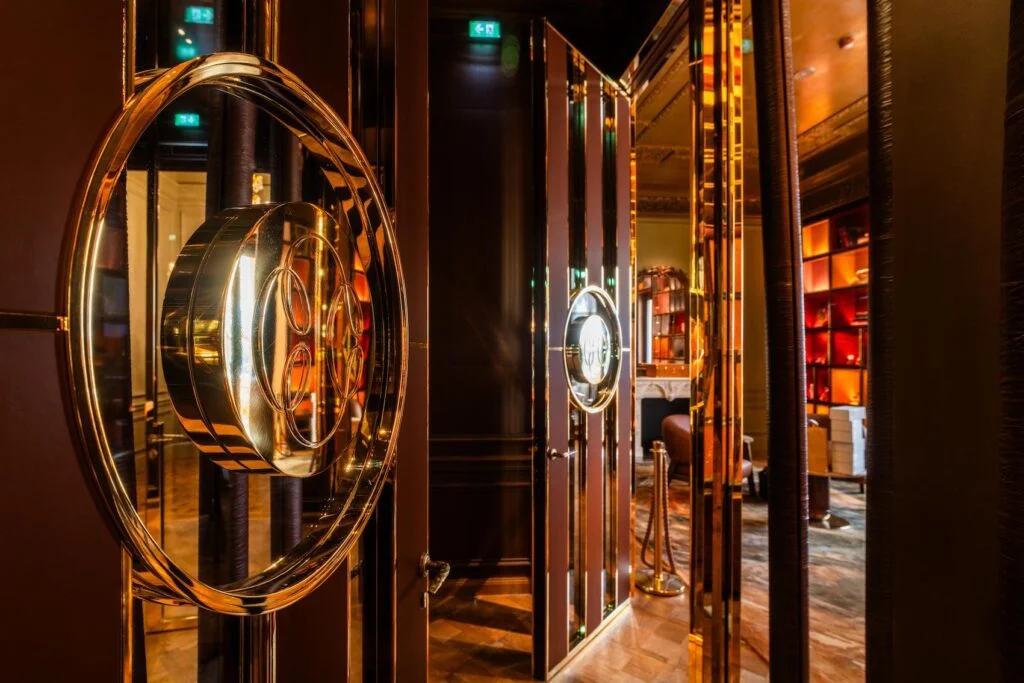
A three-metre door separates the Monte-Carlo Cigar Club’s walk-in humidor from the room beyond. It reportedly weighs more than 250 kilograms and forms part of an airlock designed to protect the climate within. Behind it sit thousands of cigars held at approximately 18°C and between 70 and 72 per cent relative humidity.
The figures are arresting, but they are not the real subject. Humidity can be engineered. Inventory can be purchased. A club must eventually produce something less measurable: a reason to return when there is no event, no introduction to secure and no audience to impress.
Monte-Carlo’s newest private room is an unusually serious attempt to solve both sides of that proposition.
A club built around the cigar
The Monte-Carlo Cigar Club opened to members on 28 May 2025, following an inauguration attended by Prince Albert II nine days earlier. It was developed by Monte-Carlo Société des Bains de Mer, the institution behind many of the principality’s hotels, casinos and restaurants, with Dominique London, the European cigar and spirits retailer founded by Dominique Gyselinck.
The partnership answers a problem that compromises many expensive smoking rooms. Hotels understand service but may treat cigars as an accessory. Retailers understand tobacco but do not always possess the kitchens, cellars, concierges or physical settings required to build a complete evening around it.
Here, each side supplies what the other lacks. Dominique London brings purchasing knowledge, retail experience and relationships across Cuban and non-Cuban production. Société des Bains de Mer brings the Casino de Monte-Carlo, the Hôtel de Paris, an established hospitality workforce and access to a wine cellar reported to contain approximately 300,000 bottles.
The club is therefore not a hotel bar in which smoking happens to be permitted. The cigar determines the room, its engineering, its service and the pace of the visit.
That distinction matters.
What the humidor reveals
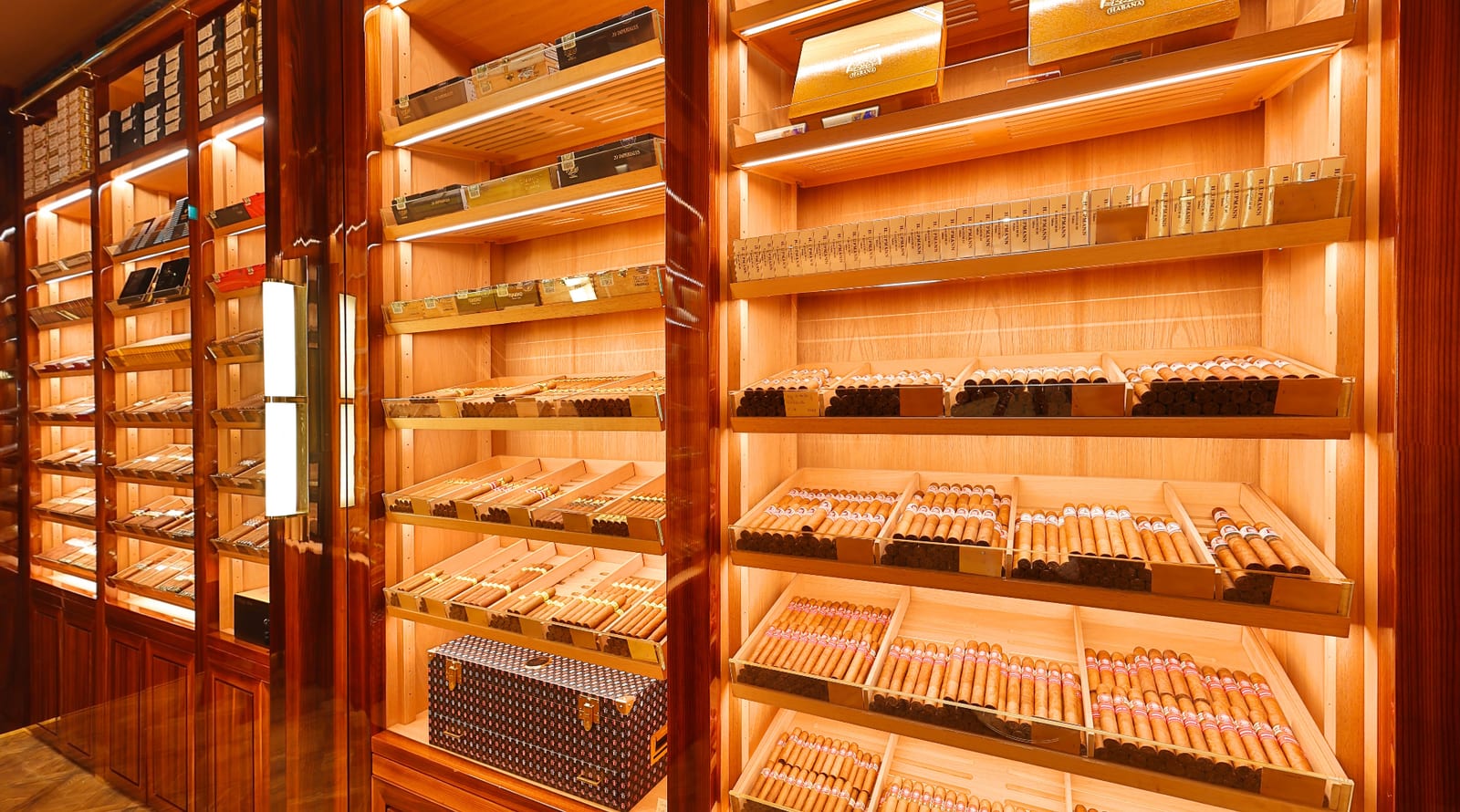
Public accounts place the club’s collection at approximately 35,000 to 36,000 cigars, with about 16,000 held in the principal humidor and a further 20,000 in reserve. Around 276 separate references have been reported, although the exact number has varied slightly as the inventory has changed.
The visible selection includes Cohiba Behike, Bolívar, limited Habanos releases and sought-after regional editions. Yet the programme is not confined to Cuba. Davidoff, Arturo Fuente, Padrón, Plasencia, Oliva and Rocky Patel have also appeared in reported inventories.
This breadth reflects a change already familiar to experienced smokers. Cuba retains historical and emotional authority, but origin alone no longer settles the question of quality. Nicaragua and the Dominican Republic now produce cigars capable of commanding sustained collector attention rather than serving as substitutes during periods of limited Cuban supply.
The club’s judgement will be tested not by whether it can display one rare cigar, but by whether it can replace it. Reserve depth permits members to smoke significant cigars rather than merely inspect them through glass. It also allows the programme to remain coherent through shortages, allocation changes and uneven release cycles.
The humidor itself was constructed by the Italian specialist DeArt using prepared Spanish cedar. Club director Jean Thomas has explained that the timber was repeatedly moistened before the collection was introduced, preventing dry wood from drawing humidity from the cigars.
This is a small detail with a large consequence. The most convincing expenditure in the room is devoted to conditions the member should barely notice.
The most convincing expenditure in the room is devoted to conditions the member should barely notice.
The same is true of the reported €250,000 extraction system. Smoke is drawn through openings integrated into the floor and ceiling, reducing accumulation across the salon. No independent technical data have been published on air changes, filtration stages or measured particulate levels, so claims of absolute odour removal should be treated cautiously. On-site reports nevertheless agree that the air is unusually well managed for an indoor cigar room.
François Blanc’s old office
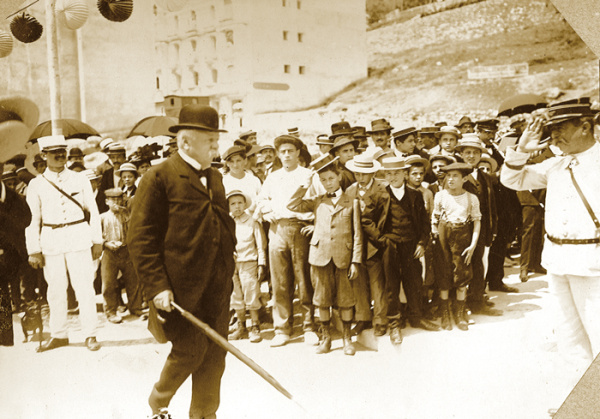
The club occupies approximately 200 square metres across its interior and terrace on the first floor of the Casino de Monte-Carlo. The rooms are associated with François Blanc, the nineteenth-century entrepreneur who transformed the casino and helped establish Monte Carlo as an international resort.
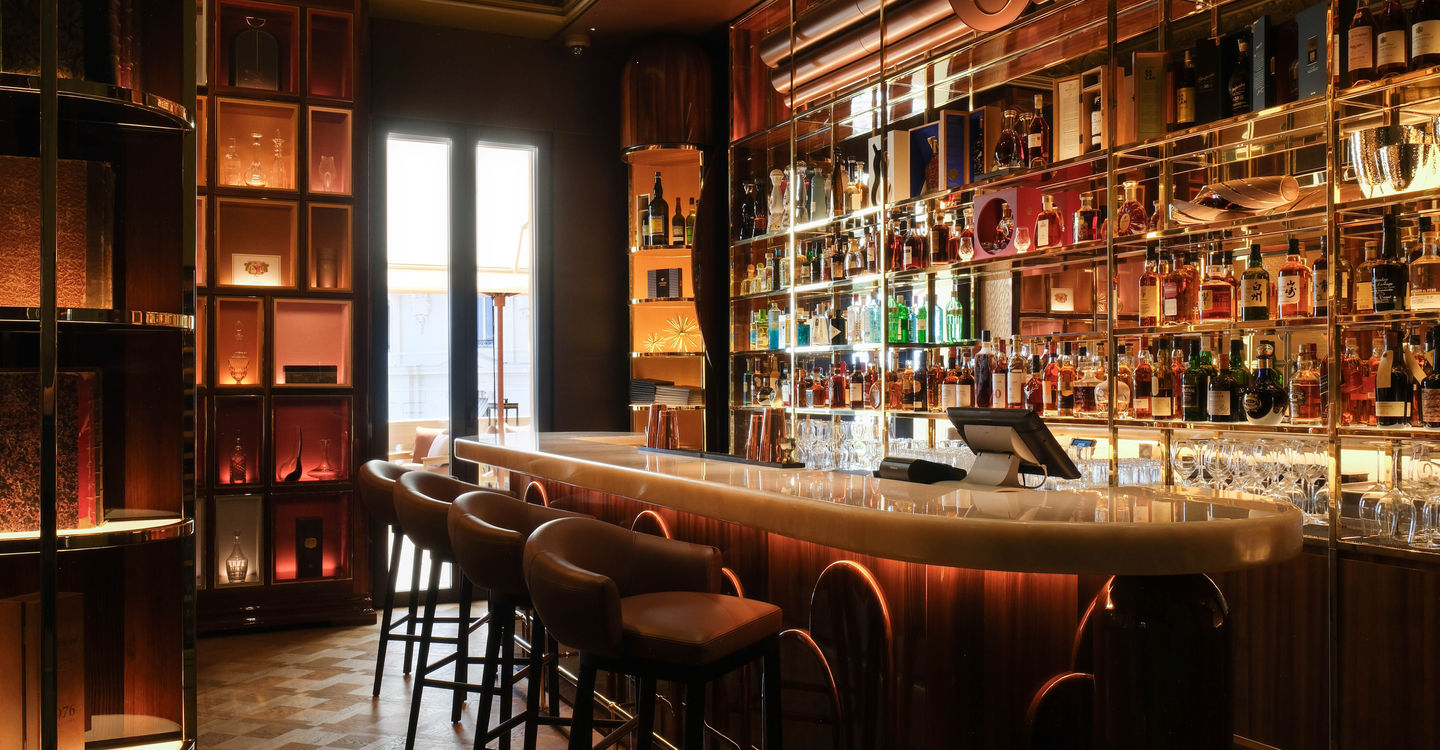
This history could easily have become costume. Instead, designers Bruno Moinard and Claire Bétaille used the changing colours of tobacco as the basis for the interior: green, yellow, bronze, brown and the darker shades of the finished leaf.
Leather chairs sit against dark timber, marble, brass and an onyx bar. Tall leather-clad cabinets behind it resemble cigars and open to reveal bottles. The references are legible without turning the salon into a themed room.
History is useful here because it explains the place. Blanc’s office once sat near the centre of a system designed to bring international wealth, entertainment and hospitality into close physical proximity. The cigar club performs a quieter version of the same function.
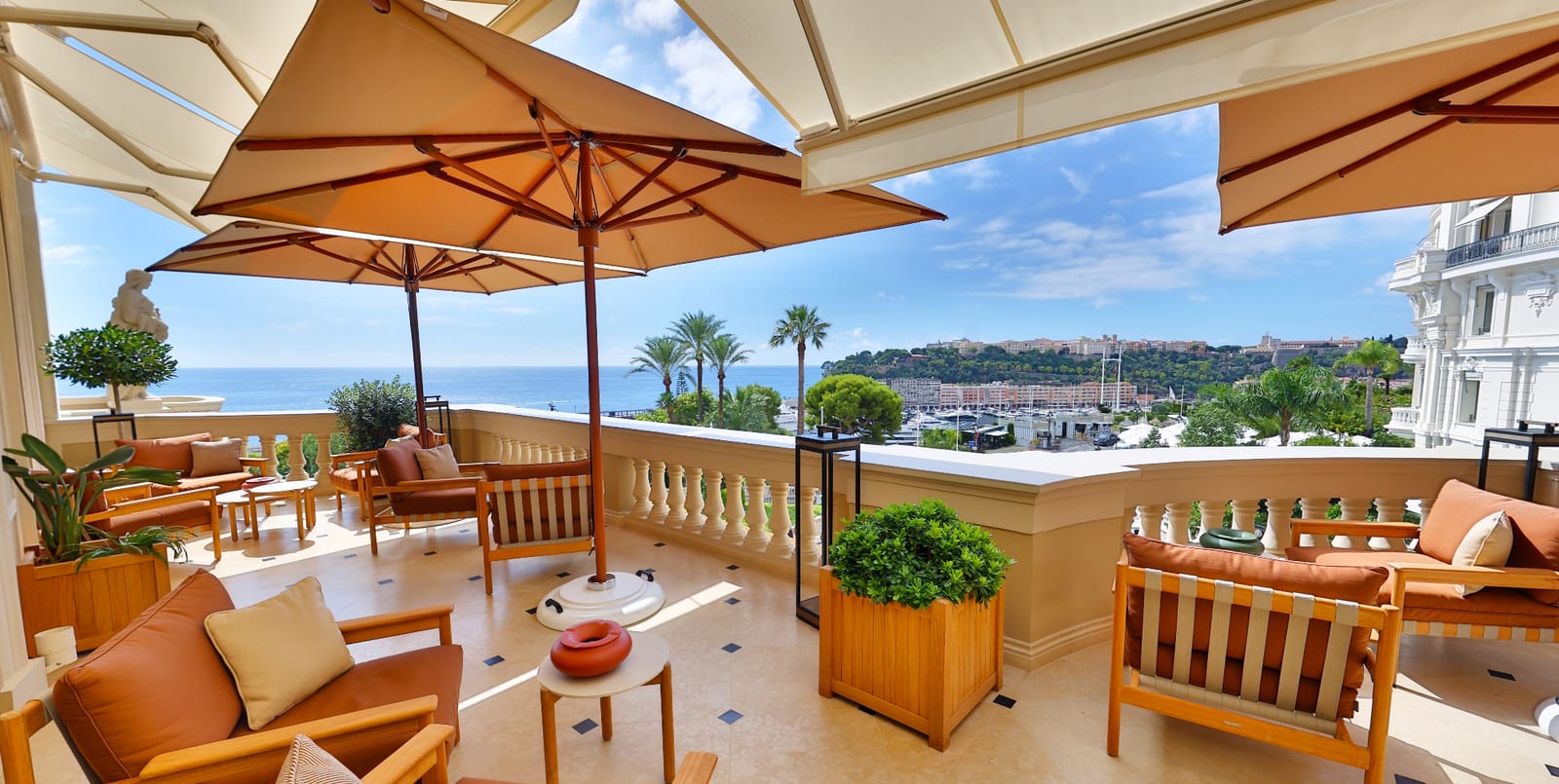
Its terrace may prove more important than the historic interior. It looks towards the Mediterranean, Casino Square and the Hôtel de Paris, with part of the Monaco Grand Prix circuit below. The setting gives members something that a cellar, shop or enclosed hotel lounge cannot reproduce: open air, changing light and a direct sense of the principality beyond the room.
Access without an audience
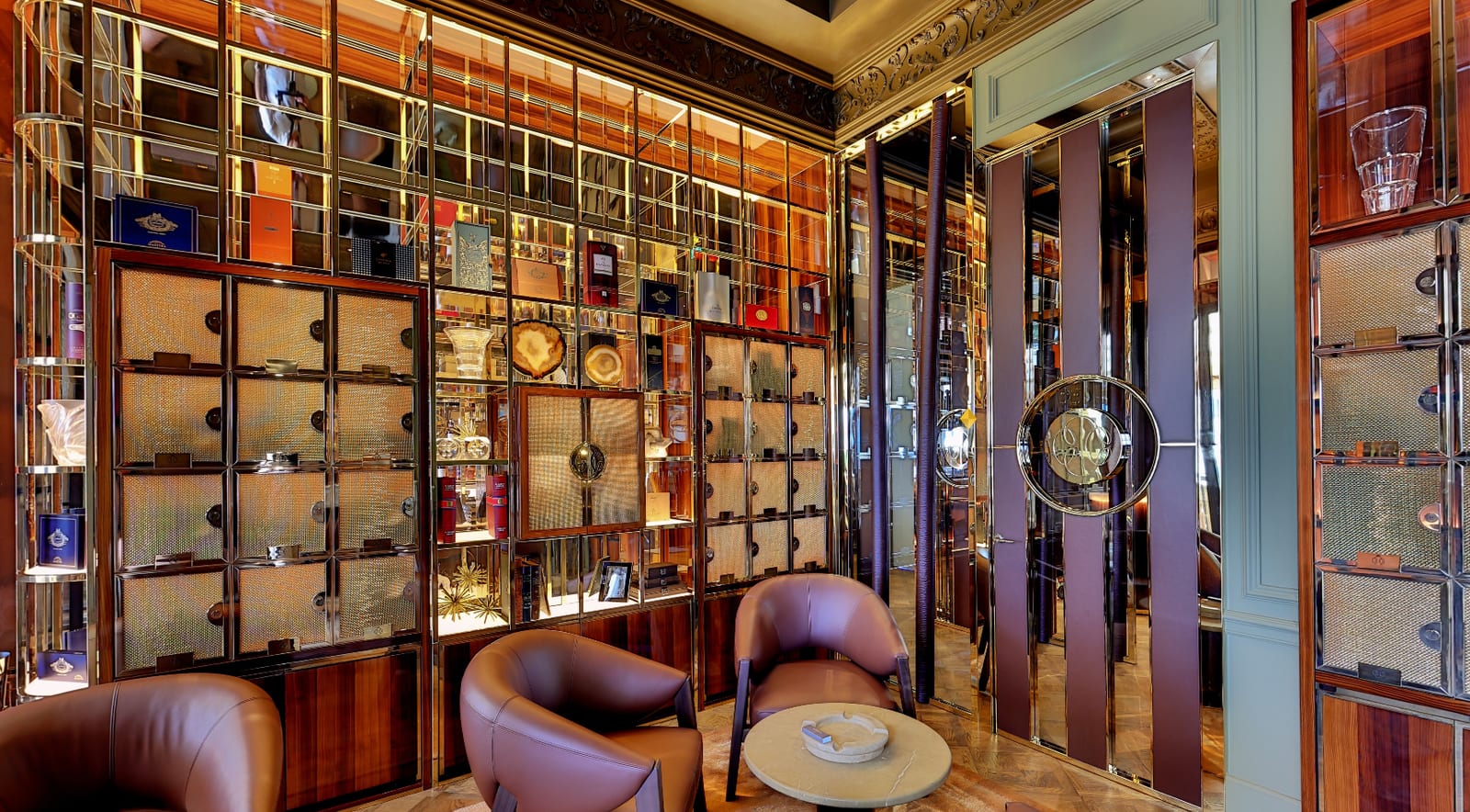
Annual membership reportedly begins at €6,000, with Member, Ambassador and Founder categories. Prospective members usually require support from two existing members and approval through a selection process.
The financial threshold is not especially remarkable by the standards of private clubs. The more consequential restriction is social. Sponsorship makes existing members partly responsible for those they introduce, while the small room places a natural limit on how many people can use it without changing its character.
Founder members have been reported to receive personal lockers, broader guest privileges and Platinum status within the My Monte-Carlo loyalty programme. Certain high-level Société des Bains de Mer clients may also receive access, although the exact conditions have not been stated clearly enough to determine how absolute the membership boundary is.
That ambiguity deserves attention. A club connected to a large hospitality group benefits from its hotels, restaurants and concierge network, but it must also prevent preferential guest access from making formal membership feel ornamental.
Dominique London chief executive Frédéric Dechamps has said the intention is to avoid “ghost members”: people who acquire the affiliation but rarely use the room. The phrase reveals more about the project than the membership fee. A club filled with names but not people is only a database with good furniture.
Service as interpretation
The cigar sommelier, Adrien Dalang, approaches selection through conversation rather than a fixed hierarchy of price or reputation. Reported discussions begin with flavour, strength, occasion and mood, then extend to the accompanying drink.
The beverage programme includes whisky, rum, Cognac, Armagnac, Champagne, wine, port and coffee. Bottles reported by visiting journalists have included The Macallan Horizon and Martell’s Cohiba-associated Cognac, though individual references and prices will change.
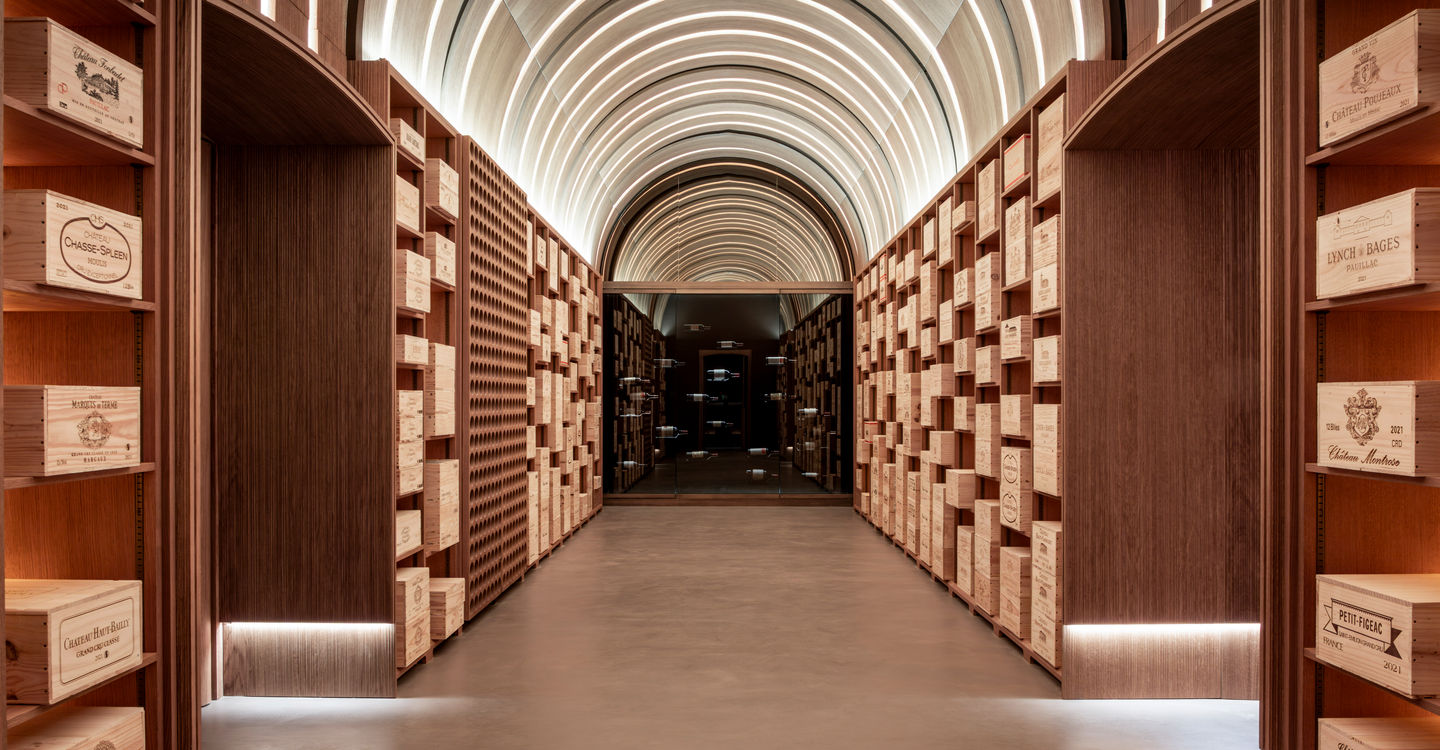
The deeper advantage is access to the Hôtel de Paris cellar. A small independent club would struggle to justify holding a comparable range of mature wine. Monte-Carlo can draw upon an existing collection and the people responsible for maintaining it.
That allows pairing to move beyond the usual reflex of placing a dark spirit beside a strong cigar. Mature Champagne, port, sweet wine, coffee or even a lighter whisky may serve a particular tobacco more intelligently. The point is not abundance. It is having someone present who can decline the obvious bottle.
The club has also held intimate tastings, producer encounters and an anniversary dinner attended by Prince Albert II. Such events can accelerate familiarity among members, but they cannot substitute for ordinary evenings. The culture of the room will be determined on the nights when nothing has been programmed.
How it compares with established cigar institutions
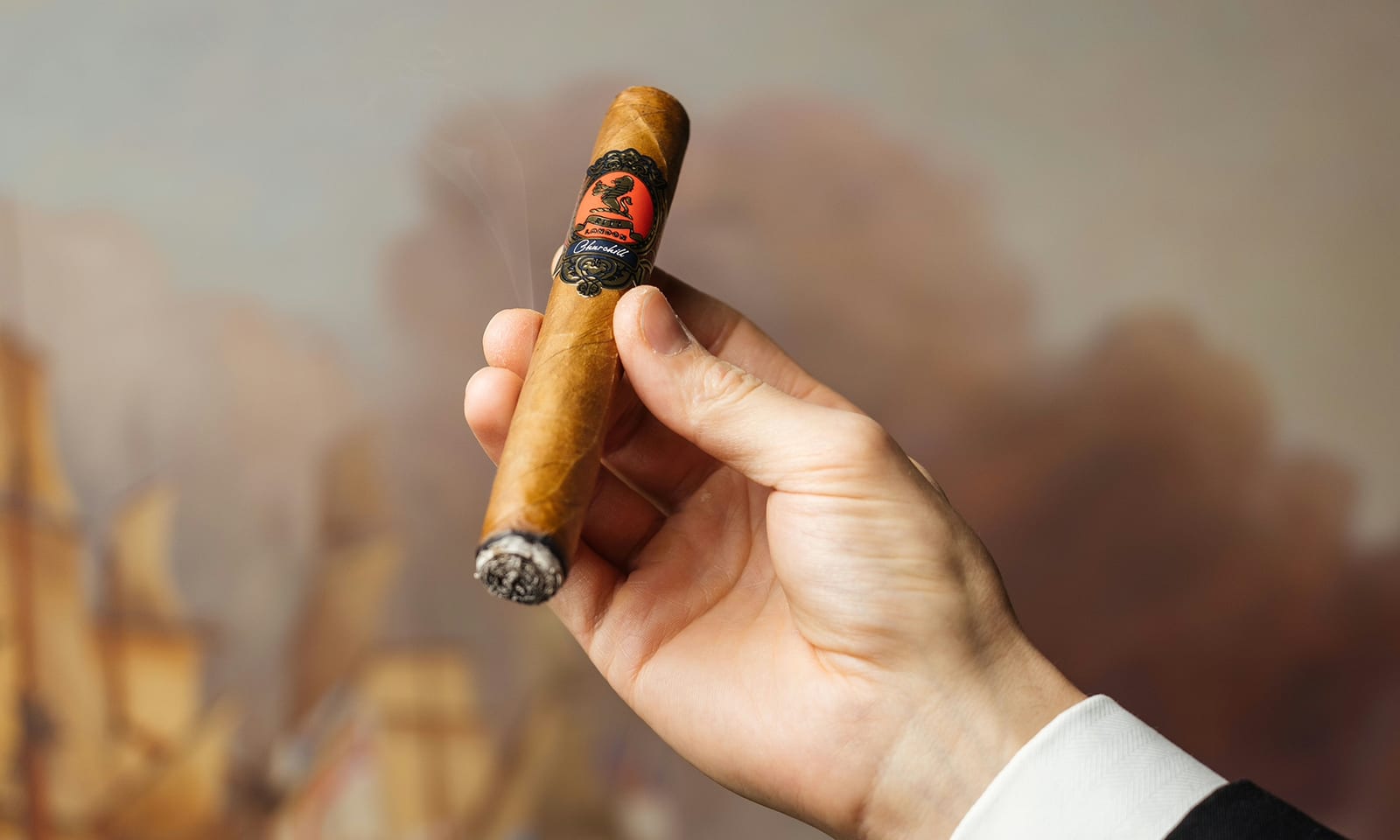
Monte-Carlo’s ambition has encouraged claims that it is the world’s leading cigar club. The available evidence supports a more precise judgement.
James J. Fox in London possesses something Monte-Carlo cannot commission: a commercial lineage extending through Robert Lewis’s eighteenth-century tobacco business and the later history of James J. Fox. Its rooms contain the memory of generations of customers, staff and objects. Monte-Carlo has inherited an important address, but its own traditions remain young.
The Ritz London offers an established hotel setting, specialist advice and access to rare or aged cigars without requiring membership. Club Macanudo in New York has more than 25 years of social history, a full dining operation and a recognisable place within the city’s cigar culture. Davidoff lounges carry the technical authority of a cigar house, while leading La Casa del Habano locations may hold a closer formal relationship to Cuban production.
Monte-Carlo’s case rests elsewhere. Few comparable rooms combine controlled membership, substantial Cuban and New World holdings, personal lockers, engineered extraction, a Mediterranean terrace and the cellars and service structure of a neighbouring grand hotel.
It may be the most complete new cigar-hospitality project of recent years. That is a defensible claim. Declaring it the world’s greatest would require time to do work that capital cannot.
Why Monaco suits the form
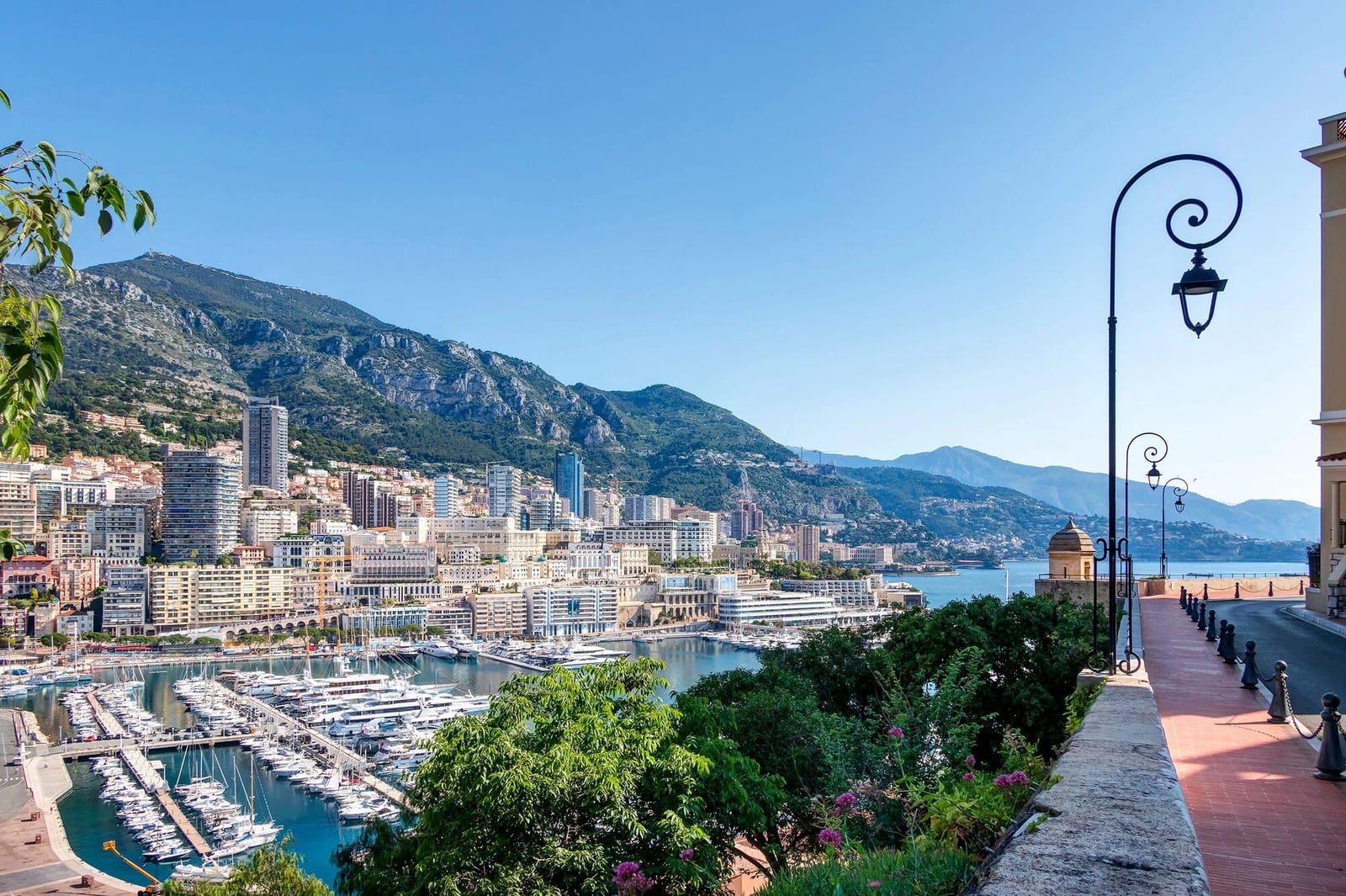
Monaco supplies an unusually concentrated audience for a club of this kind. Residents, yacht owners, family principals, financiers, hotel guests and visitors attending the Grand Prix or Monaco Yacht Show already move through the same small territory.
A cigar club offers something different from another restaurant reservation or formal reception. A cigar imposes duration. It makes efficiency slightly absurd. Conversation can begin without needing to justify what it is for.
This is particularly relevant within a social environment in which attention is frequently approached as an asset to be scheduled, protected or monetised. The club creates a fixed place for an activity that resists compression.
Its relationship to business should not be overstated. There is no evidence that the room formally presents itself as a networking venue, and doing so would diminish it. Its value lies in repeated, unstructured proximity: the possibility that people become familiar before either asks anything of the other.
The institution it has yet to become
A year is sufficient to establish operations, but not character. Public reporting remains strongly favourable and often derives from hosted visits, executive interviews and launch material. There is little independent evidence concerning service during the busiest periods, the social balance between members and hotel guests, or how consistently the rarest stock is replenished.
There is also no meaningful body of criticism. For a small private club, this silence is unsurprising, but it should not be confused with unanimous approval.
The physical proposition is already persuasive. The cigars are numerous, the engineering appears serious, the setting is difficult to reproduce and the surrounding hospitality infrastructure provides capabilities few competitors possess.
What remains cannot be installed.
A club becomes consequential when certain chairs acquire regular occupants, when the staff know when to suggest something unfamiliar and when not to interrupt, and when members return without needing an occasion. The Monte-Carlo Cigar Club has constructed the conditions for that life to emerge. Whether it becomes one of the lasting institutions of cigar culture will depend on the evenings that leave no public record.