The 5 Finest Luxury Desert Retreats in the World
The desert is unusually difficult territory for hospitality. There is no fashionable neighbourhood beyond the door, no tropical abundance to disguise weak architecture and no city waiting to rescue an indifferent afternoon. A property has fewer places to hide.
This changes what matters. A larger suite may contribute less to the experience than the position of a window. A private vehicle can matter more than an elaborate spa. Ten kilometres without another guest may be more consequential than another restaurant.
The most convincing desert retreats understand this relationship. They do not merely occupy remarkable landscapes. They determine how clearly those landscapes can be experienced.
Method
Properties across Africa, the Americas, the Middle East and Australia were considered against four principal criteria: relationship with landscape, privacy, quality of guiding and operational execution. The selection was researched independently using current property information, architectural documentation, independent reporting and experienced guest accounts; no property was contacted for inclusion and ELEVEN28 has no commercial relationship with those selected.
5. Longitude 131°
Uluṟu-Kata Tjuṯa, Australia
There are landscapes one visits and landscapes around which the journey reorganises itself. Uluṟu belongs to the latter category.
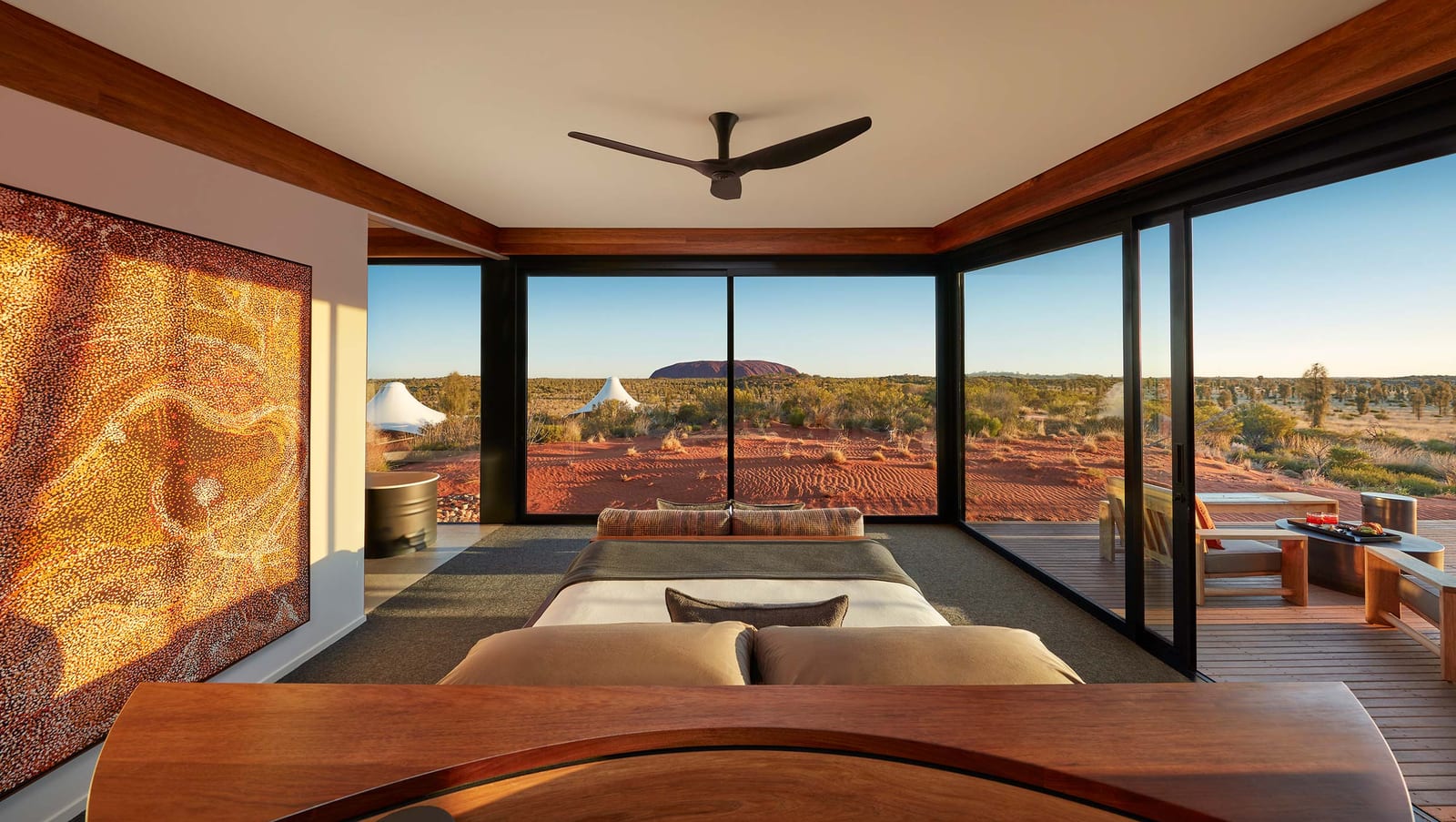
Longitude 131° sits among the dunes outside Uluṟu-Kata Tjuṯa National Park. Its sixteen tented pavilions face the desert, while the 153-square-metre Dune Pavilion frames both Uluṟu and Kata Tjuṯa and has its own plunge pool. First Nations artworks are integrated throughout the property rather than confined to gestures of regional decoration.
The original retreat was designed by Australian architect Philip Cox, but its most consequential architectural decision is simple. Floor-to-ceiling glass places Uluṟu directly within the bedroom’s field of view. The building becomes a frame.
Guiding is equally important. Access to the national park is accompanied by guides who undertake the accreditation required to work there, a meaningful distinction in a landscape whose cultural significance cannot be understood through scenery alone. Private excursions and dinners beneath the desert sky extend the experience beyond the lodge.
There are qualifications. Independent guest accounts are not unanimous on service, with some experienced travellers finding its execution below that of Australia’s strongest remote lodges. There is also a practical consideration for 2027: following the formation of Beckons from Baillie Lodges and Tierra Hotels, Longitude 131° is scheduled to close from 25 January until 19 April for refurbishment.
Its inclusion ultimately rests on something the hotel cannot manufacture: where it is, and how effectively it allows Uluṟu to remain the dominant presence.
4. Awasi Atacama
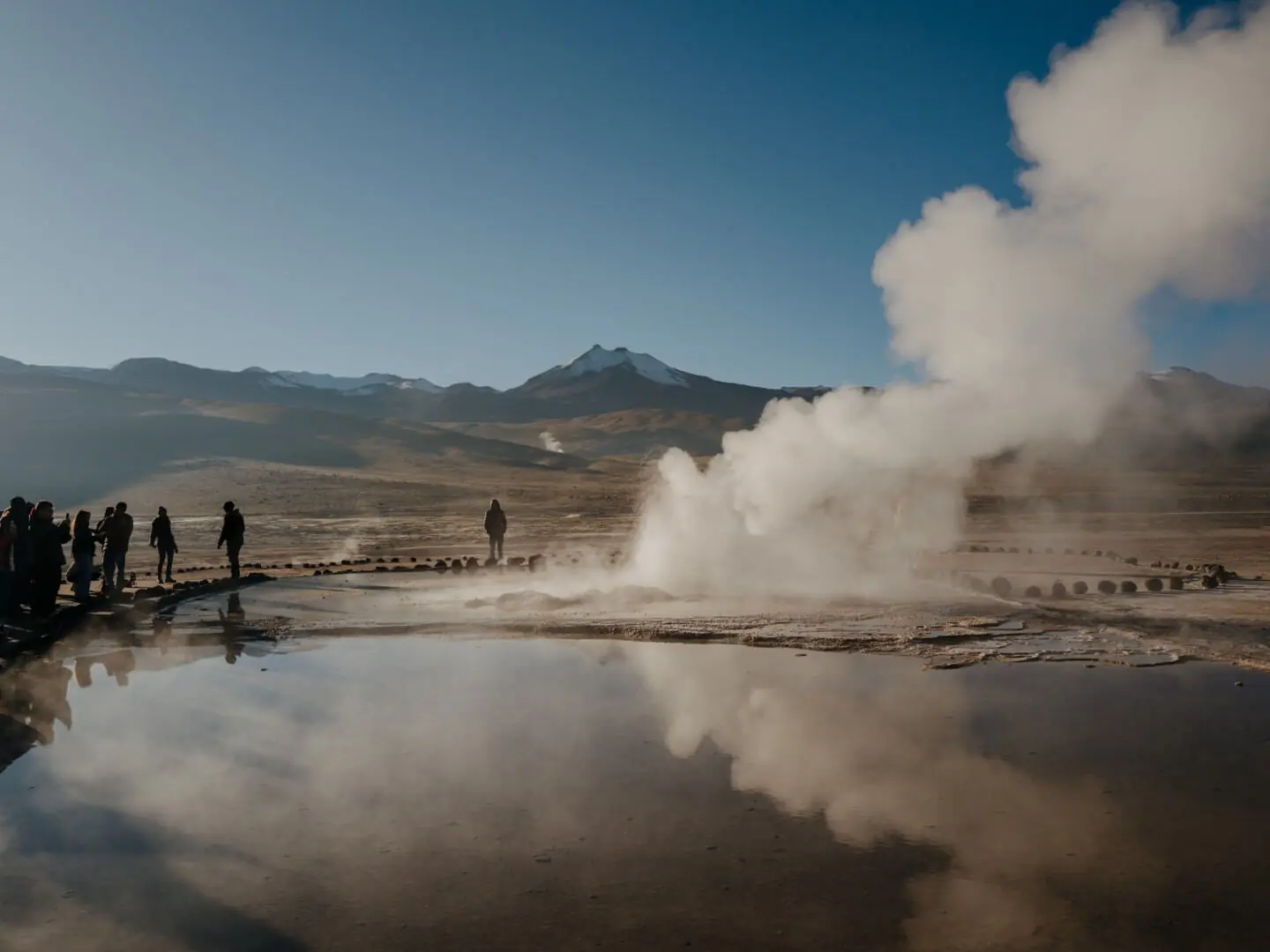
San Pedro de Atacama, Chile
At Awasi Atacama, the important amenity has four wheels.
Each room is assigned its own guide and 4x4. There are no compulsory group departures and therefore little need to structure a day around strangers. In a region extending from salt flats and flamingo lagoons to volcanic highlands, petroglyphs and astronomical sites, control over movement fundamentally alters the stay.
The lodge itself, within San Pedro de Atacama, is deliberately restrained. Rounded structures use stone, adobe, timber and thatch in reference to northern Chilean building traditions. Its communal areas are compact and the atmosphere more intimate than monumental.
This creates a useful inversion of conventional hotel economics: much of what the guest is paying for is not contained within the room.
A guide can change direction according to altitude, weather, appetite or curiosity. Chaxa Lagoon may occupy one morning; Rainbow Valley another. Horseback riding, archaeological sites and astronomy can be approached on the same principle. Chef Sebastián Prieto applies a similarly regional approach to the kitchen, working with northern Chilean ingredients including chañar, quinoa and algarrobo.
For travellers accustomed to measuring a hotel by its physical plant, Awasi can initially appear understated. Its proposition only becomes fully apparent once the vehicle leaves San Pedro.
This creates a useful inversion of conventional hotel economics: much of what the guest is paying for is not contained within the room.
3. Wolwedans Boulders Camp
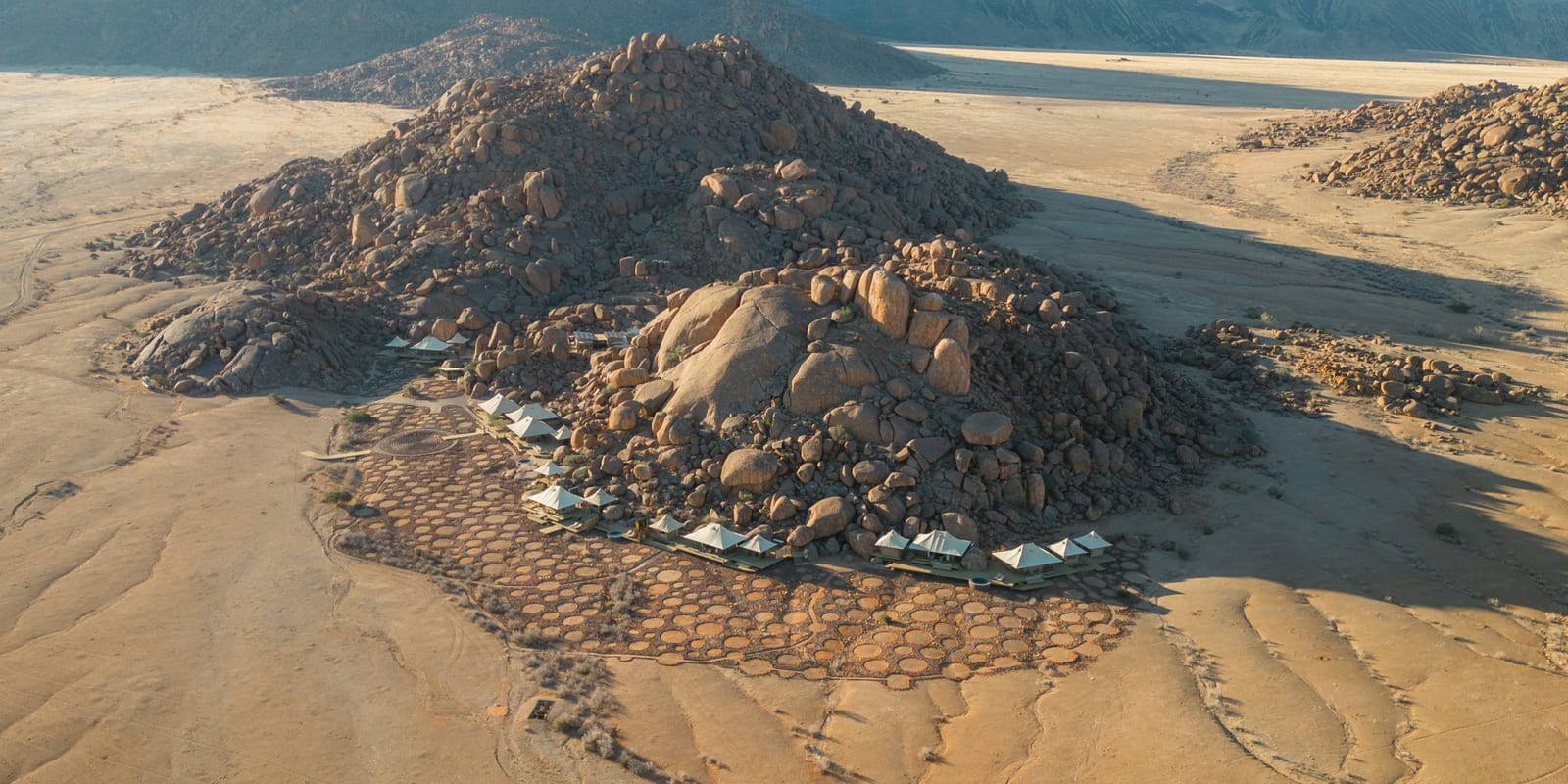
NamibRand Nature Reserve, Namibia
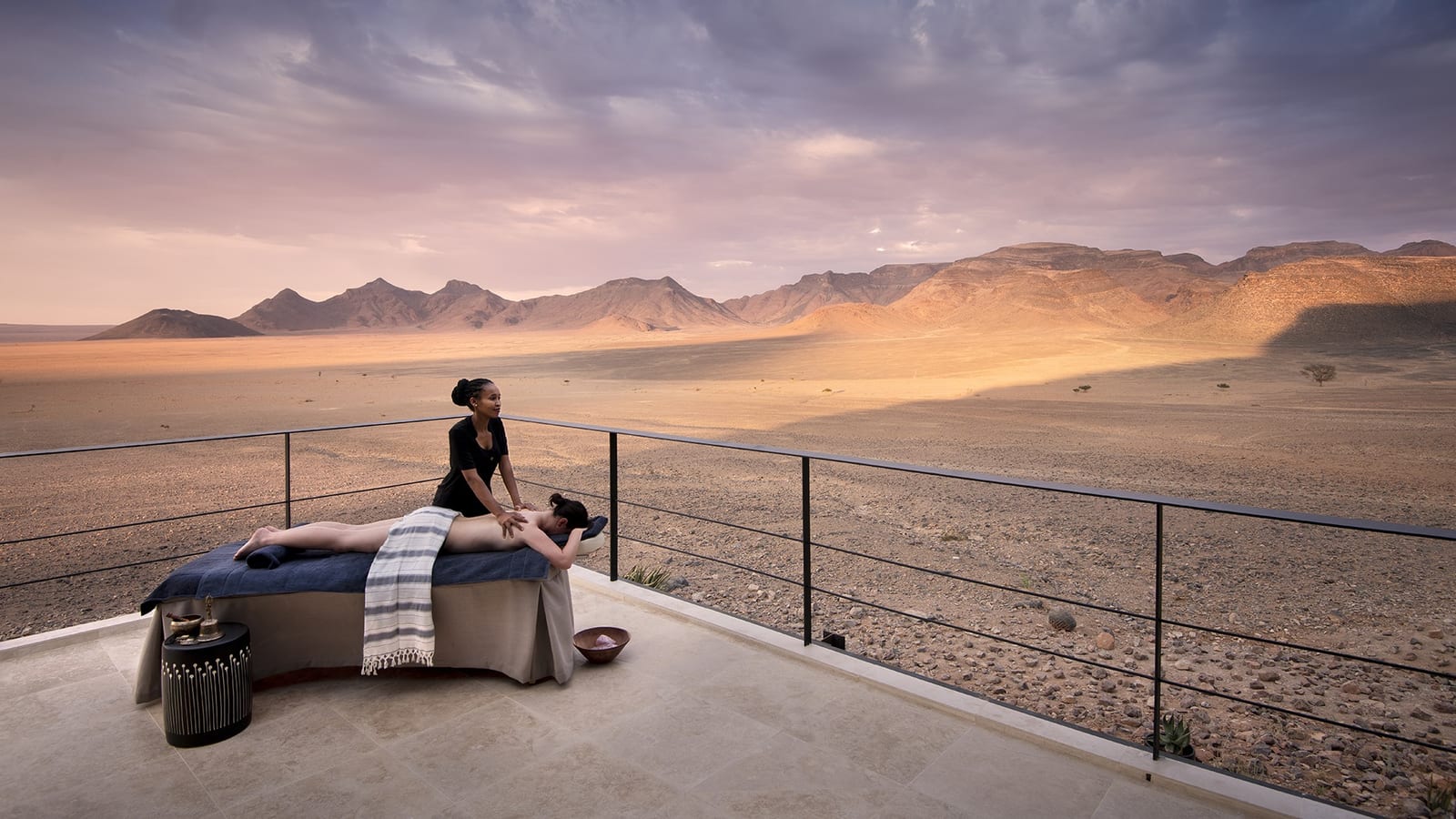
Boulders Camp tests how much hotel is necessary when almost nobody else can reach you.
It is the most remote camp in the Wolwedans collection, approximately another three hours south of its sister properties in the NamibRand Nature Reserve. Five tented rooms accommodate no more than ten guests beneath granite outcrops overlooking gravel plains and distant mountains. One tent has an entirely private plunge pool; the remaining pools are shared between pairs of tents.
Conventional measures make little sense here. The accommodation cannot compete with large resorts on technology, square footage or facilities. Geography changes the calculation.
Days can involve drives through the southern reserve, walking and e-biking, but the periods when nothing has been scheduled are equally important. NamibRand’s environmental conditions strengthen that sense of removal. It is an International Dark Sky Reserve and in 2024 became Africa’s first Wilderness Quiet Park recognised by Quiet Parks International.
Independent assessments repeatedly praise the small team’s cooking and personal service, but expectations should remain accurate. Boulders is refined wilderness camping rather than resort-style accommodation.
For some travellers that will be a limitation. For others it is the reason to travel three hours farther.
2. Amangiri
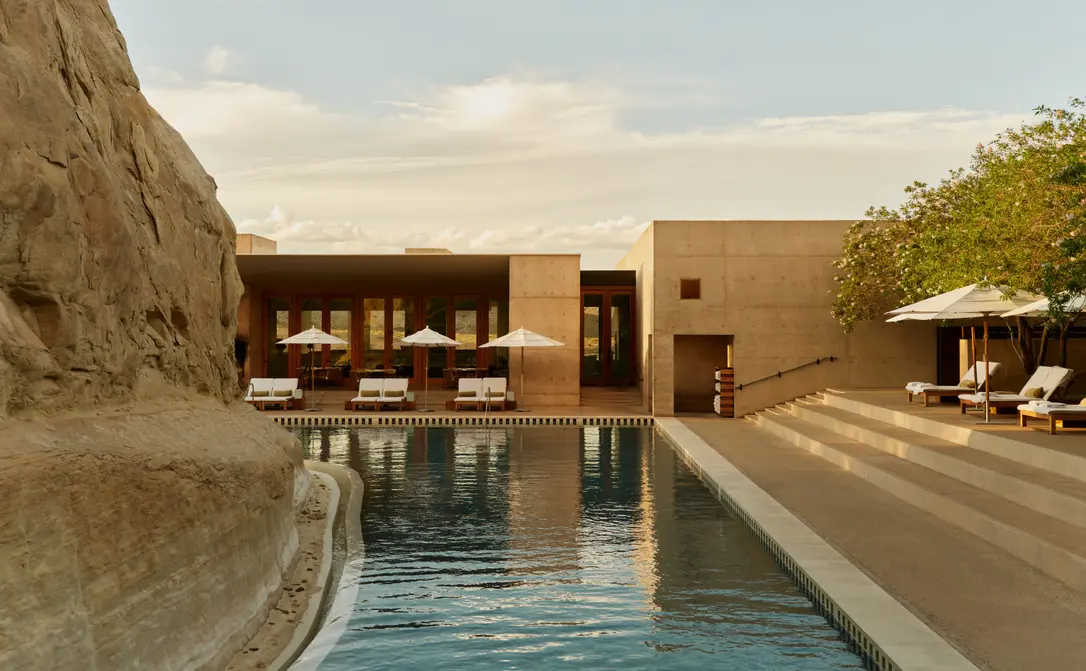
Canyon Point, Utah, United States
Few remote hotels have been photographed as extensively as Amangiri. The more interesting question is whether the building survives its own familiarity.
It does.
Marwan Al-Sayed, Wendell Burnette and Rick Joy designed monumental concrete planes and desert-toned surfaces around the geology of southern Utah. The swimming pool curves around an existing sandstone escarpment rather than removing it. From certain angles the distinction between constructed and geological mass becomes deliberately uncertain.
Across more than 900 acres of the Colorado Plateau, the main property contains 34 suites. Camp Sarika adds ten tented pavilions elsewhere on the estate. At the upper end of the accommodation, the Amangiri Suite includes an 18-metre lap pool, sun deck, firepit and sky terrace.
Yet the stronger argument for staying here lies outside the suite. Via ferrata routes, hiking, slot-canyon exploration and excursions on Lake Powell turn the surrounding plateau into something more than scenery observed through glass.
The principal reservation is operational. Recent accounts from experienced luxury travellers have described uneven food and service relative to Amangiri’s rates, including repeat visitors comparing current stays unfavourably with earlier ones. Other recent editorial visits describe markedly stronger service. The evidence therefore supports inconsistency rather than a general conclusion that the operation is poor.
At this level, inconsistency still matters. Architecture can establish the conditions for an extraordinary hotel, but it cannot compensate indefinitely for what happens inside it.
1. &Beyond Sossusvlei Desert Lodge
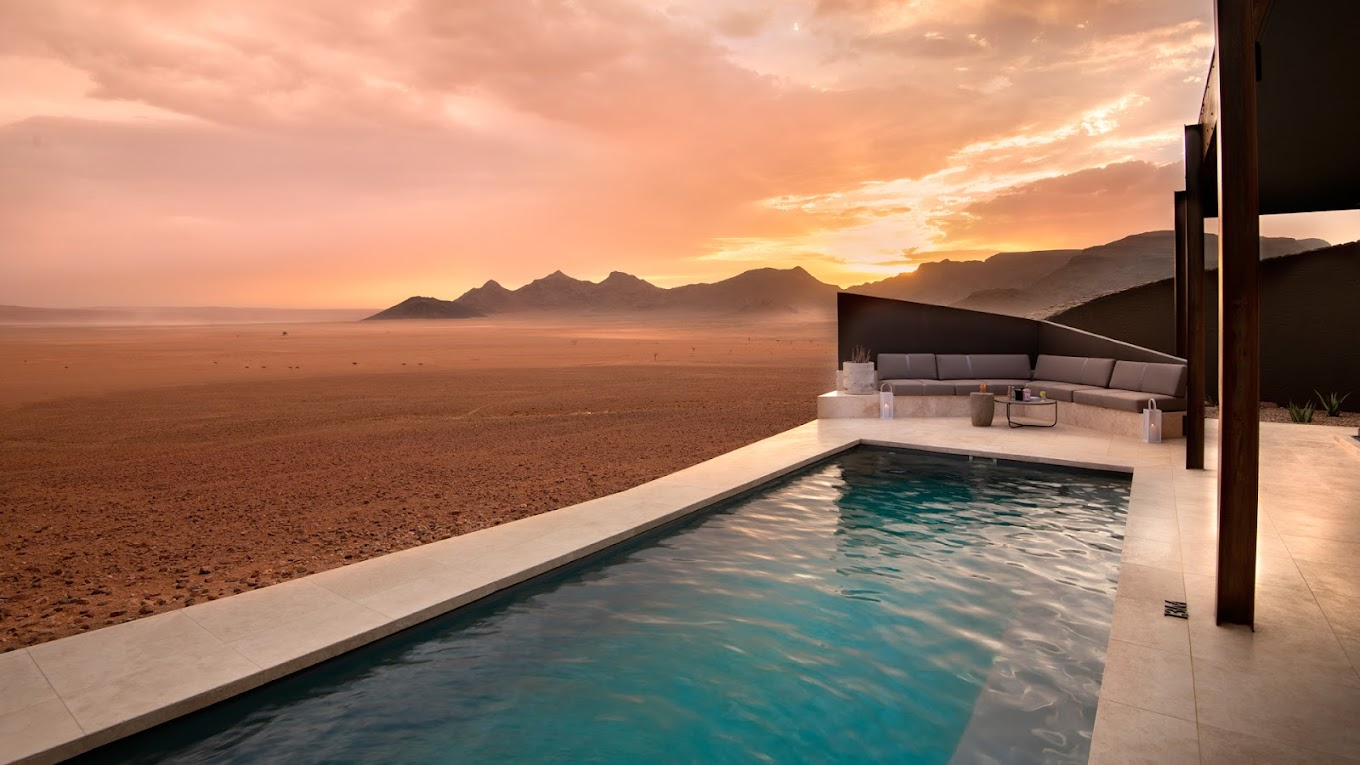
Namib Desert, Namibia
Sossusvlei Desert Lodge demonstrates what happens when the principal elements of desert hospitality reinforce rather than compete with one another.
The property occupies a private reserve among the mountains and gravel plains of the Namib. Ten suites and one two-bedroom Star Dune Suite face the desert through floor-to-ceiling glazing. Each has a plunge pool and a skylight positioned above the bed.
Its 2019 redesign, led by architect Jack Alexander with Fox Browne Creative, retained the existing footprint while making the surrounding landscape the dominant visual element of the interiors. The architecture is contemporary, but it does not require the guest to admire it independently of its setting.
That relationship continues beyond the building. Excursions reach Sossusvlei and Deadvlei; the reserve can be explored on foot, by e-bike and by vehicle; balloon flights provide an entirely different understanding of its scale. After dark, an observatory and astronomical guidance exploit another resource of the Namib: the absence of light.
Each of the other properties is more extreme in at least one respect. Amangiri makes the stronger architectural statement. Awasi provides unusually complete control over guiding. Boulders creates a greater sense of isolation.
Sossusvlei Desert Lodge is compelling for the opposite reason. There is no obvious point at which the experience weakens. Architecture, privacy, guiding, accommodation and landscape operate at roughly the same level.
That balance is unusually difficult to achieve in the desert, where adding more can easily diminish the reason for being there.
Three More Worth Understanding
Wilderness Little Kulala
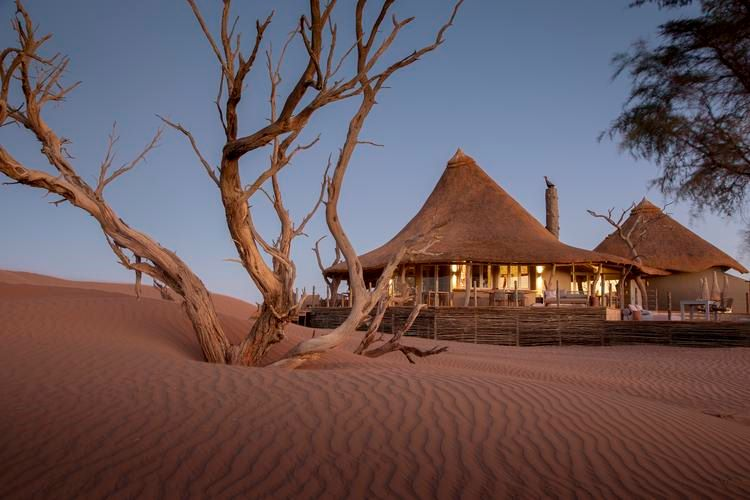
Namibia
Little Kulala’s eleven accommodations, rooftop star beds and private access towards Sossusvlei solve one of the region’s practical problems: reaching the dunes without allowing the journey to consume the day. Its case is primarily one of access and position. &Beyond ultimately offers a more resolved combination of architecture and operation within essentially the same landscape.
Banyan Tree AlUla
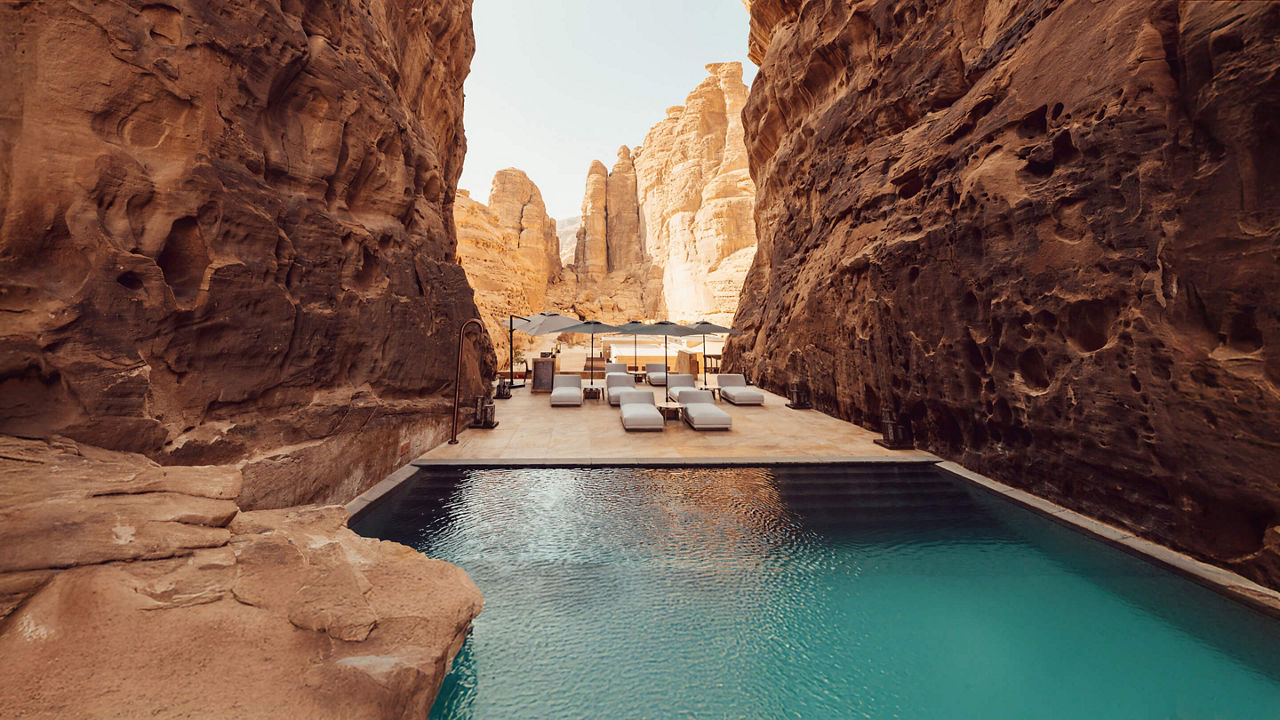
Saudi Arabia
Banyan Tree occupies Ashar Valley, where AW² designed tented accommodation against immense sandstone formations. Three-bedroom pool villas provide greater separation for families or groups, while AlUla’s archaeological landscape adds a dimension absent from most desert resorts.
Its exclusion from the principal five is not a criticism of the hotel. It reflects a different proposition. AlUla is undergoing rapid destination development, and the experience is consequently more orchestrated than the wilderness environments represented above.
Zannier Sonop
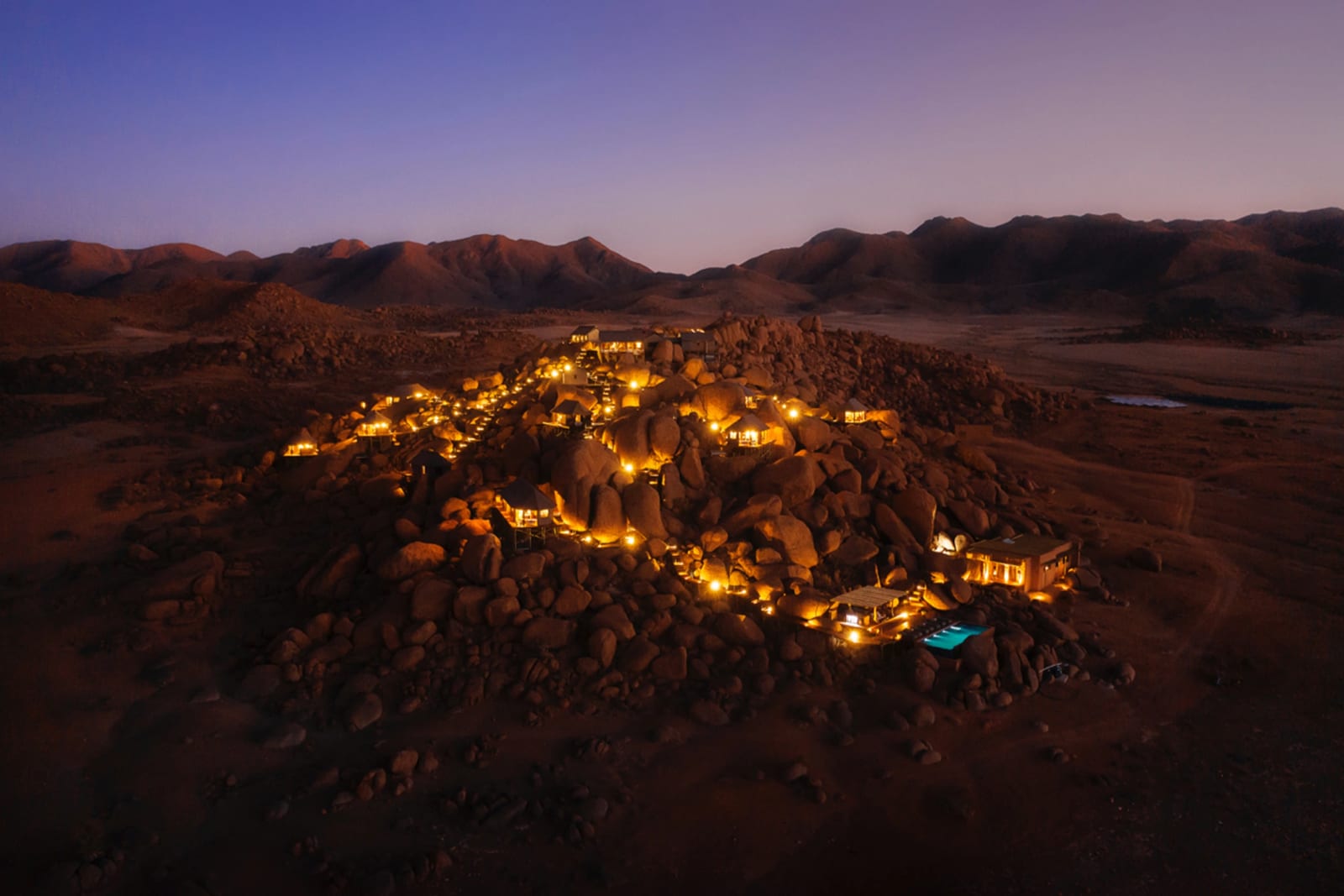
Namibia
Sonop consists of ten tented suites distributed across a 13,800-acre reserve. Its interiors reconstruct the atmosphere of a 1920s expedition through campaign furniture, telescopes, maps, antiques and carefully staged details.
The execution is coherent, but it introduces another protagonist into the experience: the hotel itself. In the five properties above, the strongest moments tend to occur when awareness of the property recedes.
What the Desert Changes
The five retreats arrive at the same conclusion through different means.
At Longitude 131°, architecture frames a culturally significant landscape. Awasi transfers value from the room to the guide and vehicle. Boulders uses geographical isolation. Amangiri turns architecture into a means of reading geology. Sossusvlei brings these disciplines together without allowing one to overwhelm the others.
This is why conventional measures of hotel luxury become unreliable in the desert. More space, more facilities and more intervention do not necessarily produce a better experience. They can create greater distance from the thing one travelled to encounter.
The difficult work is subtraction: deciding what the guest needs, what the landscape already provides and where hospitality should have the confidence to get out of the way.