The Watch Winder Is Not the Point
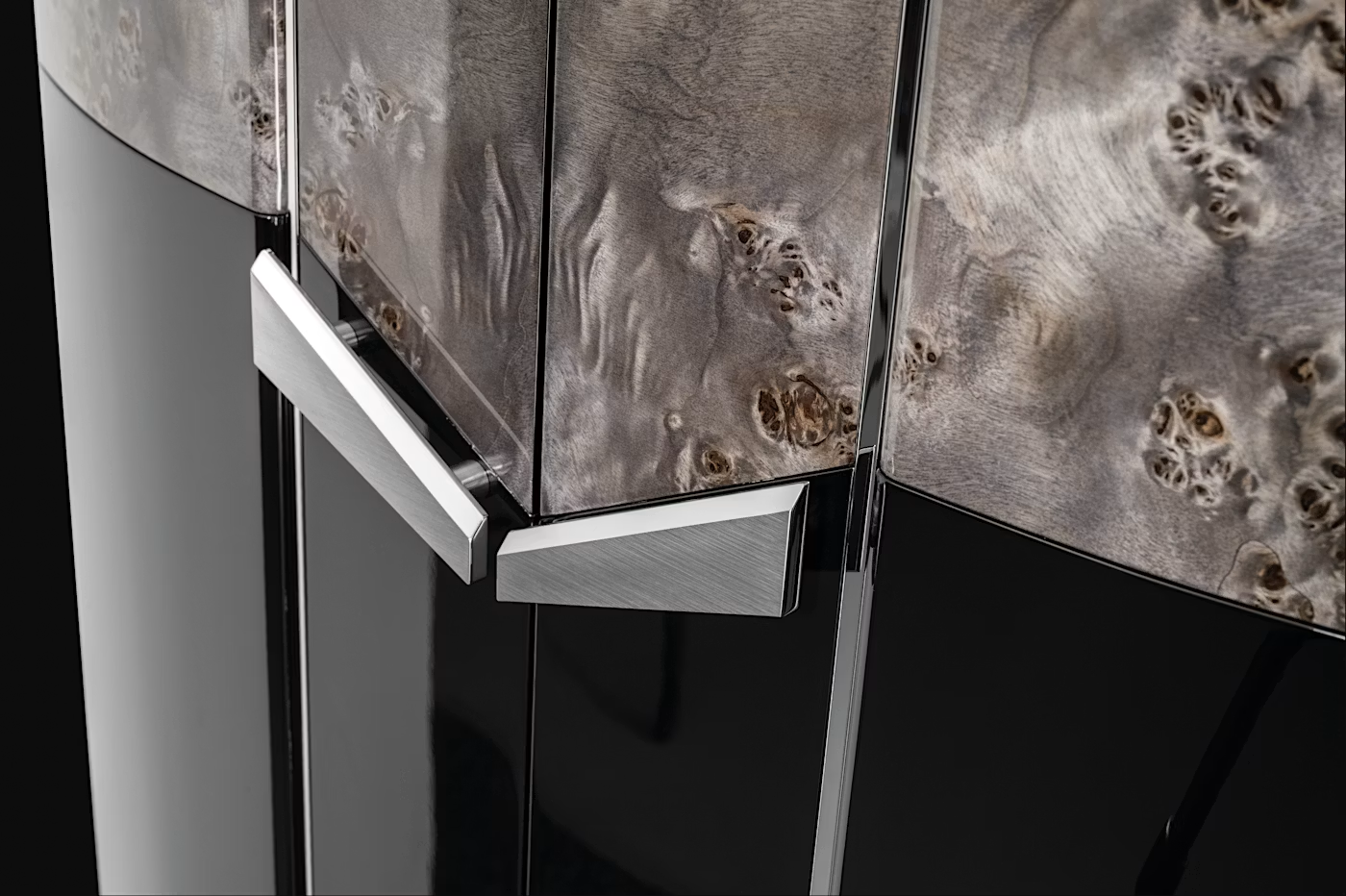
Watch winders are often treated as a single category, yet the objects grouped beneath that name solve markedly different problems. Some prioritise calibration and serviceability; others address secure storage, architectural display or the presentation of a single important watch.
A watch winder performs a task that is both simple and unusually easy to complicate. It turns an automatic watch often enough to preserve its state of wind while it is not being worn.
From that modest function has emerged an industry of lacquered cabinets, leather-covered cubes, illuminated safes, programmable rotors and kinetic sculptures. Some are carefully engineered instruments. Others are accomplished pieces of furniture. A few are expensive enclosures built around mechanisms of less obvious distinction.
The difference matters because a winder does not become appropriate merely because the watch placed inside it is valuable.
A simple automatic watch can remain at rest until it is next worn. For many collectors, winding and setting it is part of the pleasure of returning it to the wrist. The argument for continuous operation becomes stronger with perpetual calendars, annual calendars, moonphase displays and other complications that can be laborious to reset after the power reserve has expired.
The purpose is therefore not constant motion. It is the preservation of useful information.
A winder should preserve the state of a watch, not impose unnecessary activity upon it.
Watch Winders: What the Mechanism Must Understand
Automatic movements do not all wind in the same way. One calibre may respond to clockwise rotation, another to counter-clockwise motion, while a third winds in either direction. The number of turns required to maintain reserve also varies.
A credible winder must therefore offer more than movement. It should control direction, turns per day and intervals of rest, ideally for each watch independently. This becomes essential when one cabinet houses several movements with different requirements.
There is also a quieter question: what happens after ten years?
Motors wear. Batteries require replacement. Software becomes obsolete. A cabinet may be too large to return easily, while an embedded mechanism may be difficult to remove without disturbing its finish. Service access, replaceable modules and continuing parts support are not secondary details. They determine whether an object remains useful after its novelty has passed.
The five manufacturers below approach these questions from distinctly different positions.
Method
Eleven manufacturers were considered against winding control, reliability, construction, serviceability, collector relevance and design distinction. No manufacturer was contacted, and no commercial relationship exists with any company included.
1. BUBEN&ZORWEG: the collection as architecture
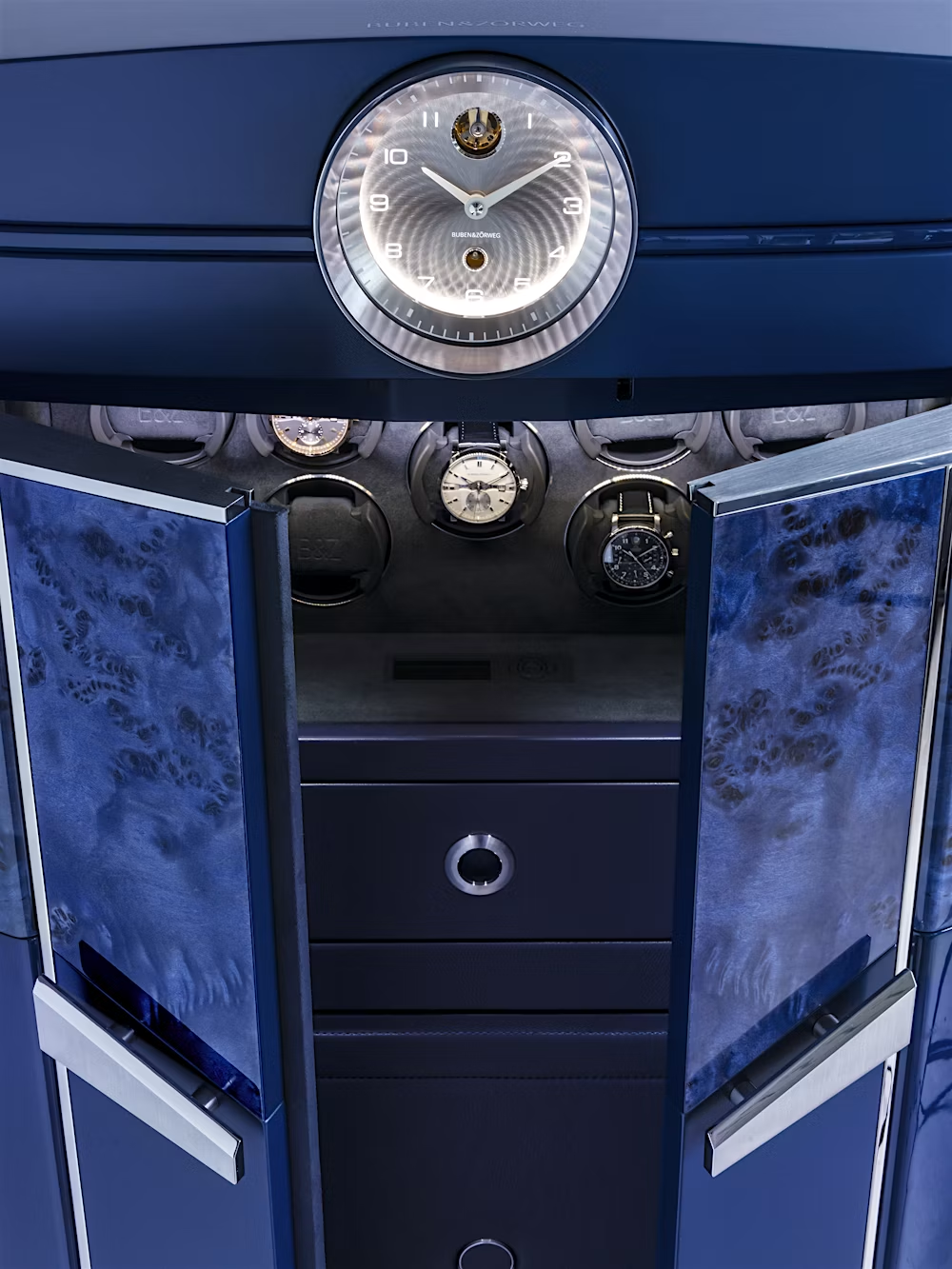
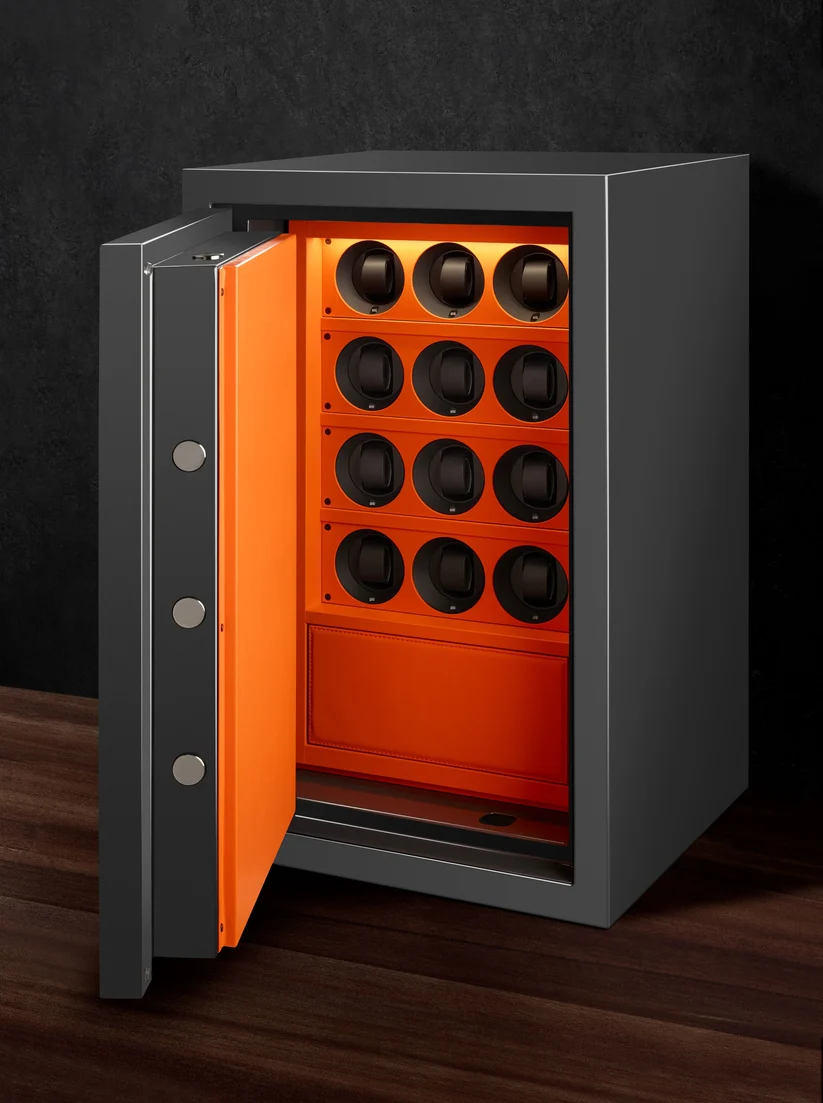
BUBEN&ZORWEG is most persuasive when a collector requires more than a row of rotating watches.
Founded in 1995, the company developed its Time Mover winding system around the turn of the millennium and has since placed it inside objects ranging from compact winders to armoured cabinets and room-scale installations. The proposition combines winding, storage, display, lighting and certified security within one visual system.
This is significant for collections that no longer fit comfortably inside conventional boxes. A purpose-built installation can organise watches alongside jewellery, documents and other personal objects while controlling how much remains visible. The winding modules form part of the architecture rather than appearing as accessories placed inside it.
Materials vary by commission and collection, including lacquered timber, leather, stainless steel, glass and carbon-fibre treatments. The company also gives unusual attention to hinges, powered openings and interior illumination, details that affect daily use as much as appearance.
Its weakness is the same quality that makes it compelling. The scale can become theatrical. A collector seeking discreet modules for an existing safe may find the complete environment unnecessary.
BUBEN&ZORWEG is most relevant when the requirement extends beyond winding to the architecture, security and presentation of the collection itself.
2. SwissKubik: winding reduced to its mechanism
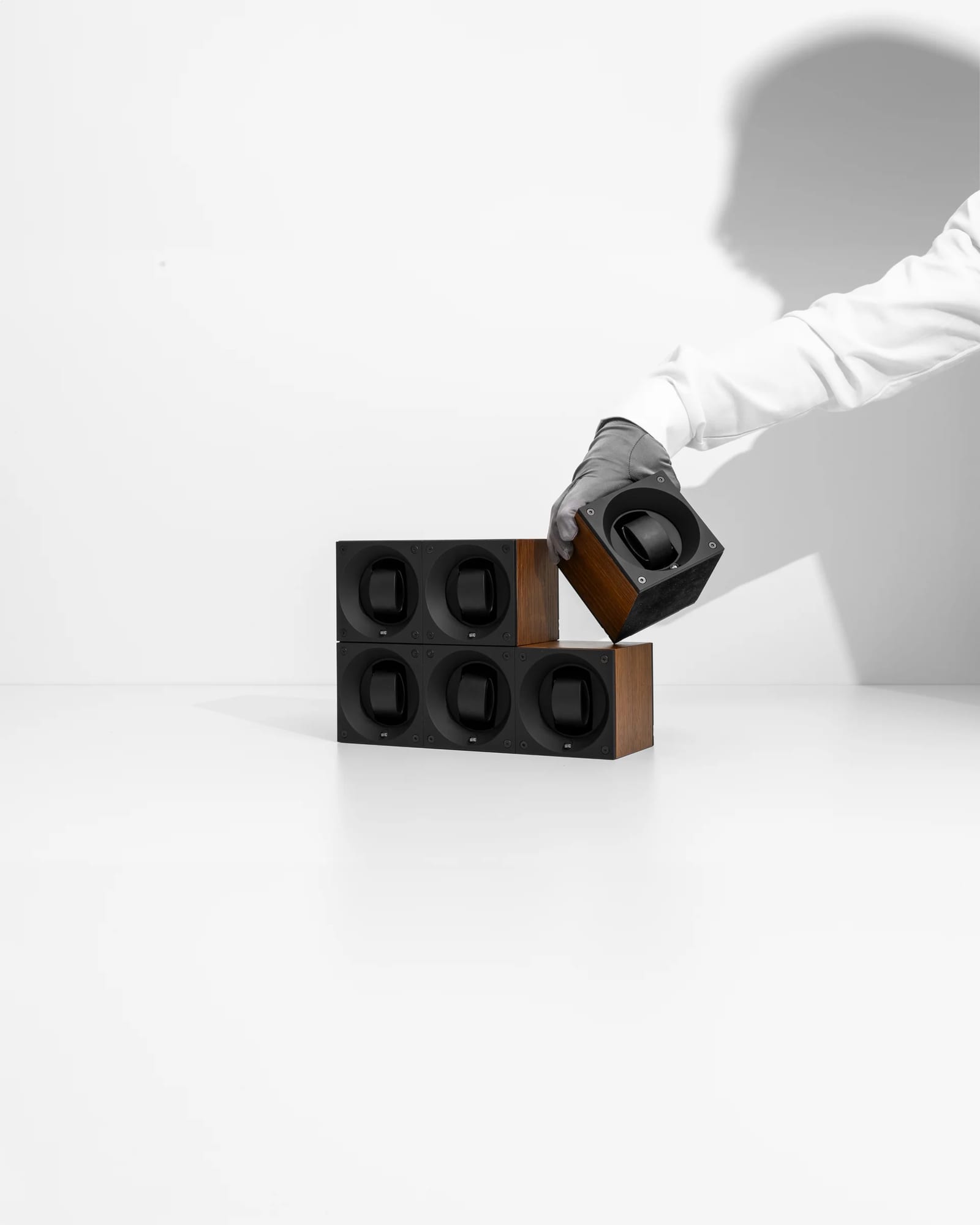
SwissKubik takes almost the opposite position.
Its essential object is a cube, compact enough to sit inside a safe and modular enough to expand with a collection. Decoration is available in aluminium, leather, carbon-effect finishes and other treatments, but the format remains subordinate to the work it performs.
Standard models use a predetermined bidirectional cycle. The more adaptable Masterbox range allows the owner to alter direction and turns per day through USB-C or Bluetooth control. Each module operates independently, allowing a perpetual calendar and a simple automatic movement to receive different programmes within the same installation.
Battery operation is another practical advantage. A module can remain inside a safe without additional wiring, while individual units can be removed or replaced without dismantling a large cabinet. Current Masterbox models carry a three-year guarantee.
SwissKubik’s technical credibility is reinforced by its use inside products made by Scatola del Tempo. The arrangement is revealing: one manufacturer supplies the mechanism, while the other supplies a different understanding of material and ritual.
The cube makes little attempt to become a decorative object. Its value lies instead in precise winding, compact dimensions and a modular format that can be expanded, removed or replaced without disturbing the wider collection.
3. Scatola del Tempo: the winder as a collector’s object
Scatola del Tempo began in 1989 with a problem encountered by its founder, the collector Sandro Colarieti. The company describes his solution as the first automatic watch winder, although that account is more safely understood as the house’s documented history than as an independently settled industry claim.
What is not in question is the company’s longstanding proximity to serious watch collecting. Its history includes work associated with Patek Philippe and Gérald Genta, while its current winders continue to be made in the province of Como.
The contemporary Rotore range combines Italian leatherwork with SwissKubik winding mechanisms. Vegetable-tanned calfskin, softly lined interiors and coordinated storage cases allow the machinery to sit within a broader system of trays, travelling cases and watch boxes.
This division of labour is sensible. Scatola del Tempo does not need to pretend that its principal advantage is proprietary electronics. Its distinction lies in how the mechanism is housed, handled and allowed to age.
Long-term owner accounts include examples said to have operated quietly for many years, in some cases for approximately two decades. These reports are anecdotal rather than controlled evidence, but they offer a useful indication of how older units have performed in continued use.
The more basic single-watch models use fixed winding cycles, so collectors with demanding calibre-specific requirements should examine the programme carefully. It is most persuasive for collectors who want the winder to belong visually and materially to the same world as the watches it maintains.
4. Orbita: a different theory of movement
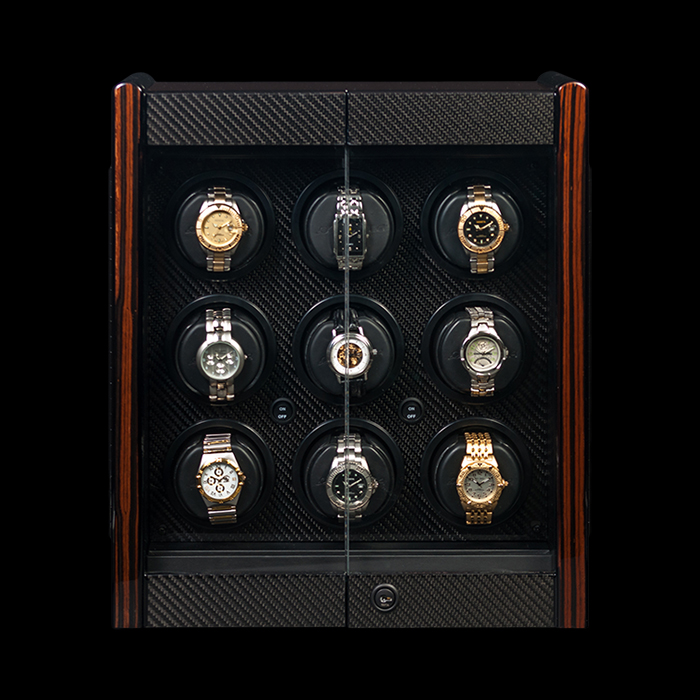
Most winders rotate a watch around a fixed axis. Orbita’s Rotorwind system instead moves it through periodic oscillation intended to reproduce aspects of motion on the wrist.
The distinction does not establish that Rotorwind causes less wear or protects a movement more effectively; independent comparative evidence is insufficient for that conclusion. It does, however, show that Orbita reconsidered the movement of the watch rather than merely redesigning its enclosure.
Orbita also produces conventional programmable winders, individual safe modules and cabinets capable of holding substantial collections. Larger systems include powered lifts that conceal or reveal several rows of watches, while smaller units can be installed inside existing secure storage.
The company has a strong reputation among experienced owners and watchmakers, particularly for long-term support. Its publication of winding guidance and instructional material also makes the ownership experience easier to assess before purchase.
Reports concerning sound are less consistent. Some collectors describe Orbita mechanisms as extremely quiet; others have found particular programmable models intrusive. Installation surface, cabinet resonance and motor type may all contribute, but the disagreement means that categorical claims of silence would be unjustified.
Orbita is most convincing for a collector who values mechanical independence, scalable capacity and the possibility of integrating winding modules into a safe already in use.
5. Bernard Favre: when the mechanism becomes the display
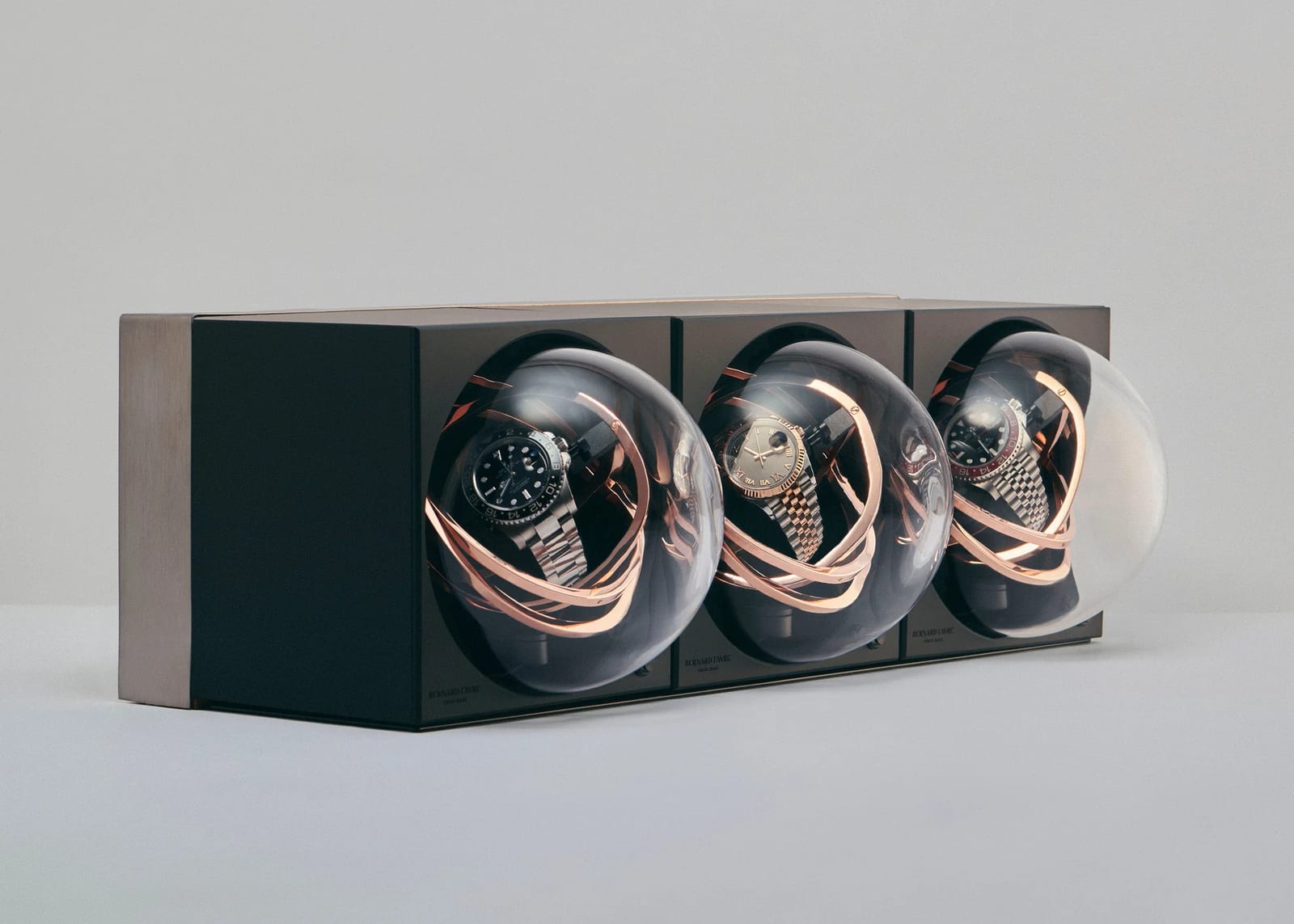
Bernard Favre’s Planet does not attempt to disappear.
Two intersecting rings carry a single watch through a double-axis rotation beneath a glass dome. The movement recalls an armillary sphere, a gyroscope or the suspension of a marine chronometer. The watch remains the centre of the object, but it no longer stands still while being observed.
The Planet offers selectable direction and turn counts, rechargeable operation and, depending on configuration, quoted autonomy of approximately 100 to 120 days. Its structure combines an aluminium base, stainless-steel rings and a Swiss motor assembly.
As a practical solution for a large collection, it makes little sense. One Planet is required for each watch, while the moving frame occupies considerably more room than a conventional cube. The mechanism may also compete visually with the object it has been asked to maintain.
That is partly the point.
For a single perpetual calendar, independent watch or mechanically expressive piece displayed in a study, the Planet turns an otherwise concealed process into part of the display. Its mechanism remains visually legible even when no watch is mounted within it.
The strongest designs do not decorate the same mechanism. They decide what kind of ownership the mechanism is meant to support.
Other Manufacturers Considered
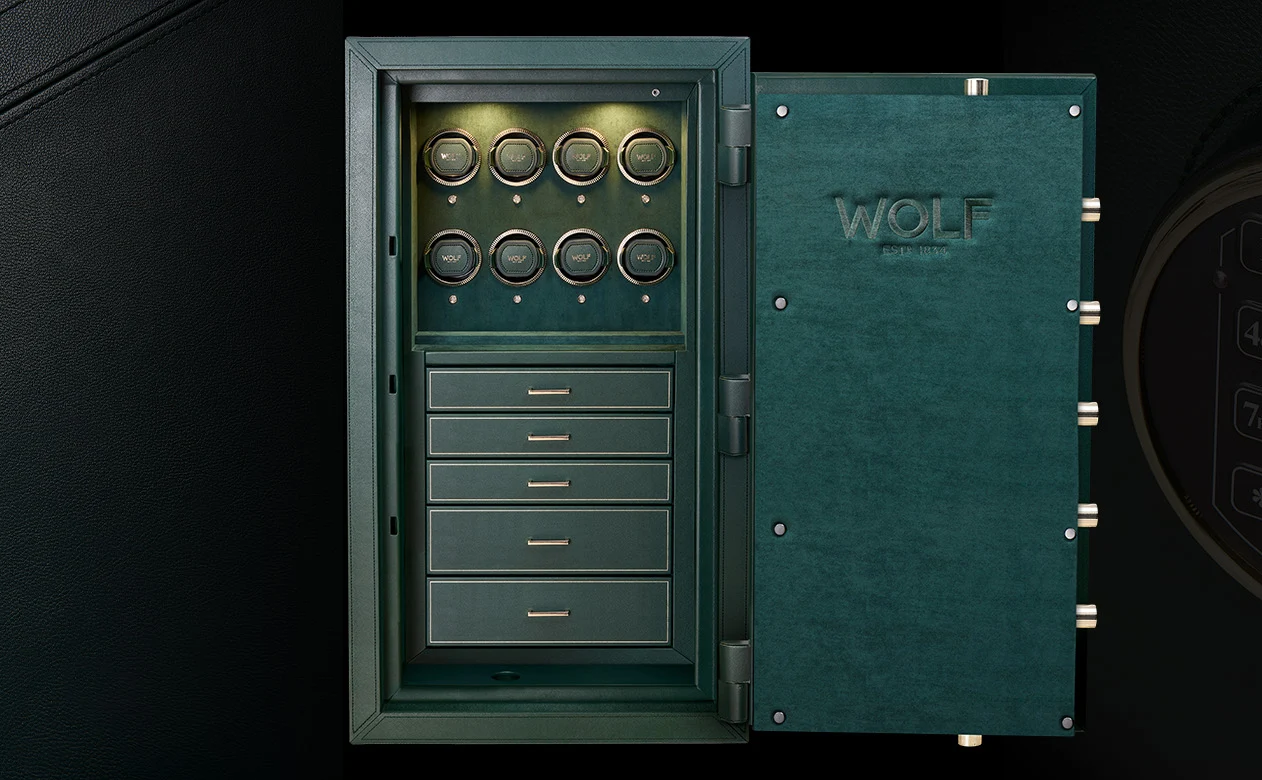
WOLF deserves attention for a patented system that counts rotations rather than estimating them through elapsed motor time. Its programmable models, lock-in cuffs and five-year limited warranty give the range practical credibility. Material execution varies across its extensive catalogue, however, making the brand more difficult to assess as a single proposition.
Rapport London has a long history and a broad decorative range. Owner accounts concerning noise and reliability are mixed, while the company publishes less technical detail about its winding systems than SwissKubik or WOLF.
Elma’s Cyclomotion belongs to another setting entirely. Designed primarily for workshops and manufacturers, it winds and tests several watches in different positions. It is useful evidence of what a professional instrument prioritises, but it was not conceived as an object for the dressing room or private study.
Which Winder Suits Which Collection
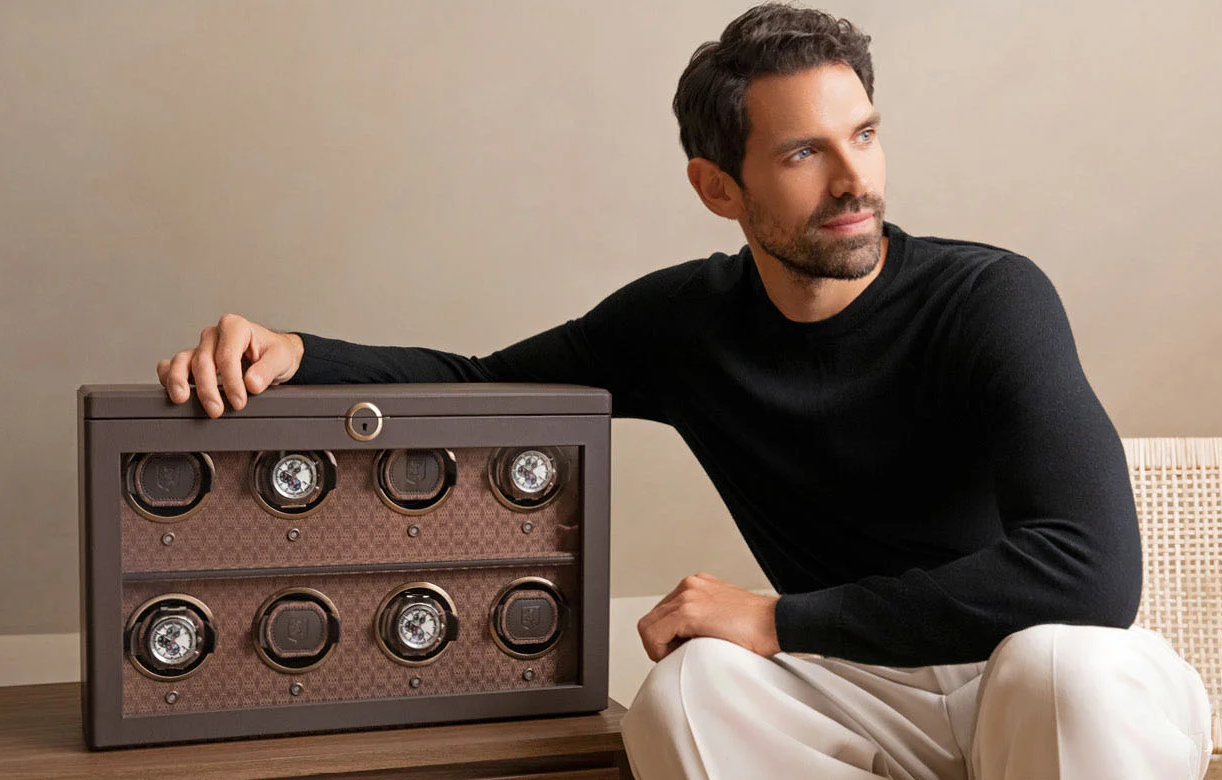
The decision begins with the watches that genuinely need to remain running.
A collection dominated by time-only automatics may require no winder at all. A group of perpetual calendars may justify independently programmed modules inside a secure safe. A large collection requiring a new physical home presents a question of architecture and security. One important watch kept on a desk permits a more expressive answer.
The manufacturer should then be judged on details that are easy to overlook at purchase: whether a module can be removed independently, whether the cushion fits smaller bracelets without strain, whether settings depend on an application that may not exist in fifteen years, and whether a motor can be serviced without returning an entire cabinet.
The five manufacturers answer different ownership requirements. BUBEN&ZORWEG integrates winding with furniture and security. SwissKubik reduces it to a compact, programmable module. Scatola del Tempo combines established mechanisms with Italian leatherwork. Orbita offers alternative movement systems and scalable capacity. Bernard Favre makes the winding process part of the display.
The value of the watch does not determine the appropriate solution. The complication, the setting, the required level of security and the intended life of the collection do.